


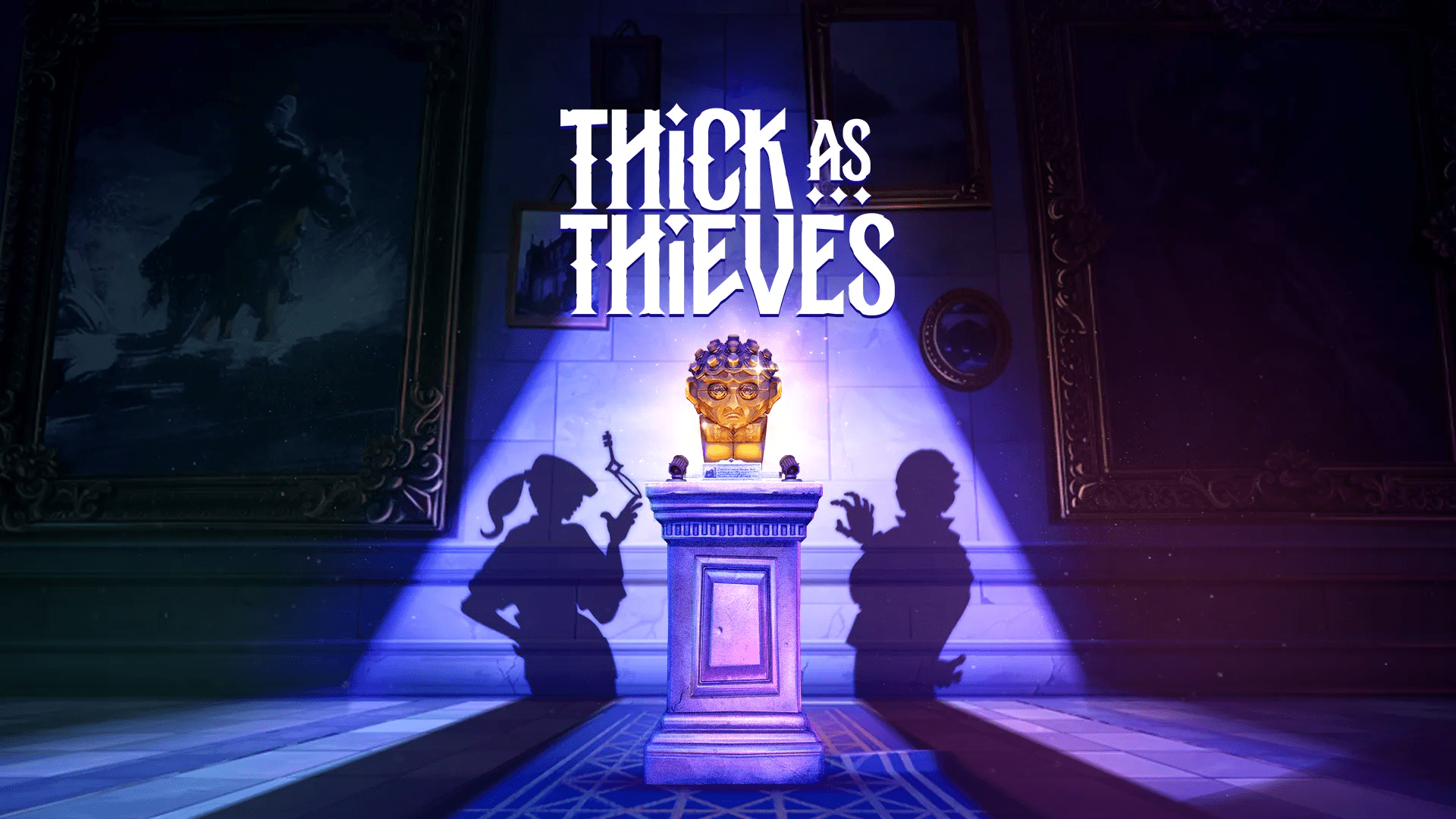


When Thick as Thieves was first announced, it was met with both huge excitement and equally big disappointment. The excitement mainly came from the fact that Warren Spector, the game designer who gave us Deus Ex and the father of immersive sims, is working on it. For those who might not know, he also worked on System Shock, Thief: The Dark Project, and several Ultima Underworld titles. Getting a new game from such a legendary designer after so many years was genuinely a reason to celebrate. On the other hand, the game was originally conceived as a PvPvE experience, a kind of stealth extraction title, which led to a lot of disappointment. But over time, the team at OtherSide Entertainment and Warren realized that the PvPvE system might not be the best direction for this project, so they wisely shifted focus toward something different, something much closer to what fans of Warren Spector would actually expect.

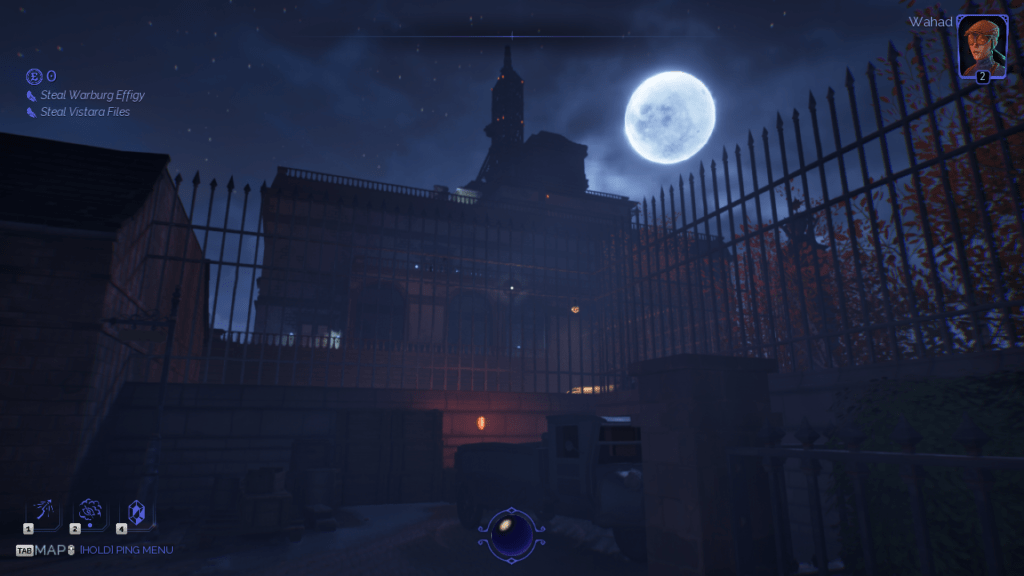
Thick as Thieves is a stealth game, some might even call it an immersive sim, playable solo or with a friend. So, thankfully, there’s no PvP, and once again, no open-world map. Even that alone already makes it feel much closer to what you’d expect from a Spector-designed game. The premise is quite interesting. The game takes place in an alternate 1910s Scotland, in the city of Killcairn. You play as a member of the Thieves’ Guild, and your small but important group has decided to uncover all the arcane secrets hidden by the wealthy elite of this world. That’s the setup, and the story unfolds through messages you receive from the Guild’s higher-ups, basically telegram-like instructions telling you what to do next.
Once you get a mission, you are sent to one of the two maps in the game to find and steal the item required by you and the Thieves’ Guild. At first, I was honestly a bit disappointed when I saw there were only two maps in the game. Of course, at that point, I hadn’t yet seen how complex they actually were. And that also ties into the game’s length. Neither of these maps is small, linear, or simple, in fact, both are massive, even if they don’t seem like it at first.
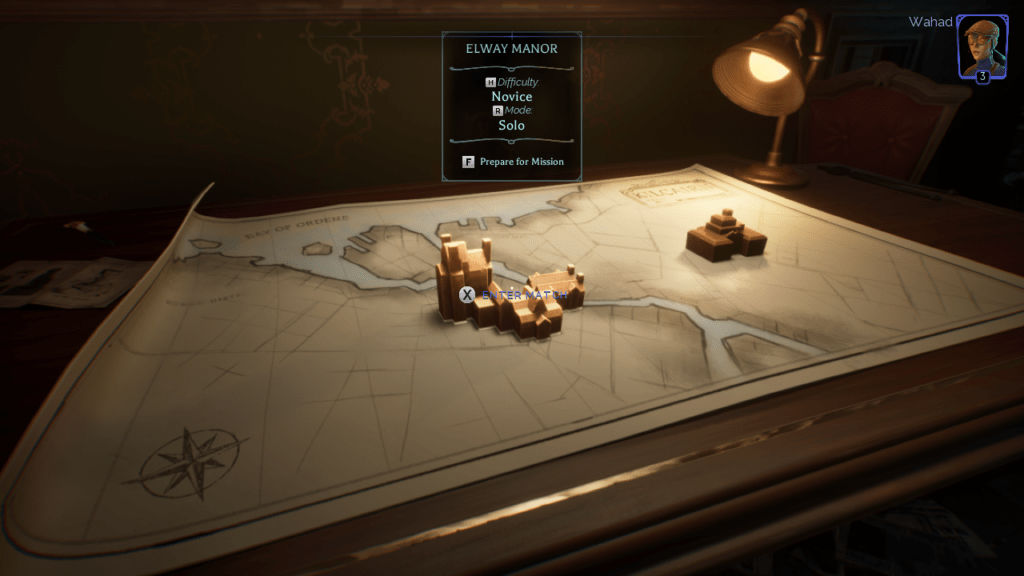
I was told that completing all missions takes around four hours, which sounded fine to me at first, a short stealth experience. I even thought, “What could be complicated about that?” Then I started the first mission, and it quickly became clear just how complex the first map really is in every sense. It took me three or four attempts to clear it. And when I say attempts, I mean full runs, because each mission gives you a fixed time limit: 45 minutes to find what you need, and 8 minutes to escape the map through magical doors. I didn’t even realise how quickly time was passing during my first few tries.
That’s mostly because this world hides so much behind every corner, in every room, and in every section of the estate or house you’re infiltrating. And of course, nothing is simple. Hallways are interconnected, rooms are everywhere, and your job is to find a single required item inside these massive structures. This is where notes and documents you find become incredibly helpful, including internal guard communications scattered across the map. You’ll read everything from their internal arguments about where to hide certain items, to decisions made by guards about placing something in a location no thief would ever think to check. These small clues act as a kind of compass, guiding you toward your objective.
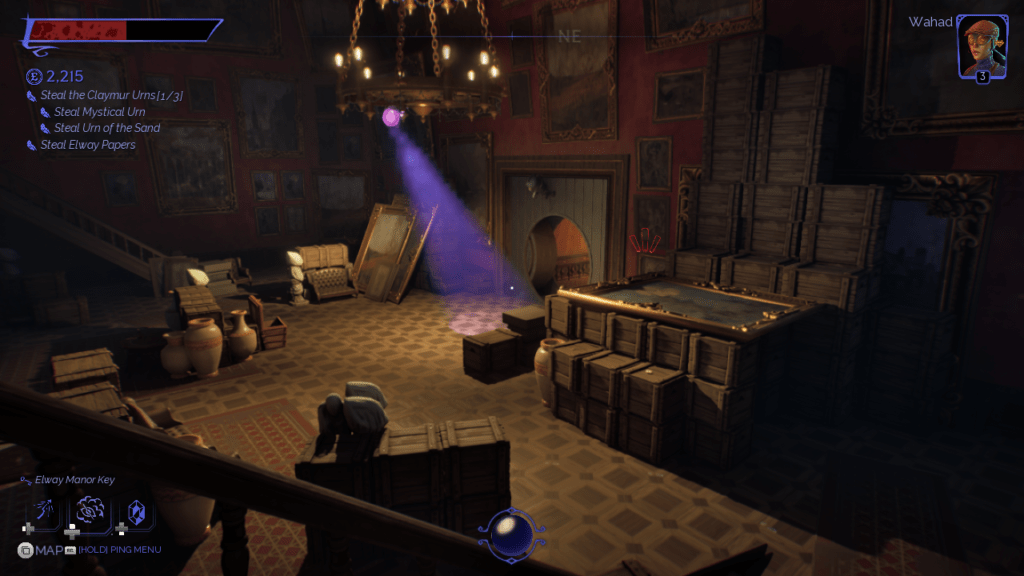
The game also provides an actual compass that initially shows where key evidence or information is located, but it doesn’t give you a direct path to get there. I really liked this approach because it forces you to explore and get lost inside these huge estates, hoping the next room might hold the clue you need, while the mission timer slowly ticks down. The level design deepens this sense of disorientation, sometimes showing you that a clue is just five meters away, but not in the same room, forcing you to find an entirely different route to reach it.
That early feeling of not knowing what to do first can easily overwhelm you and create a sense of anxiety and confusion, very much like a rookie thief on their first job. At least that’s how I felt during my first few attempts at the opening mission. Every time I entered the map, I thought, “Okay, now I know what to do and where to go,” only to realize the game had placed me in a different starting position, forcing me to adapt all over again until I learned every inch of the map.
And honestly, I really liked that. The game pushes you to fully learn each map over time, and eventually you do. That initial confusion, that feeling of slowly finding your way through these enormous environments, is genuinely great. It takes up most of your time, and some might think, “I’ll clear this in one go,” and yes, that is possible if you’re careful, patient, and already experienced with stealth games and what they expect from you. We didn’t have that luxury during the review period, and honestly, I’m glad we didn’t.
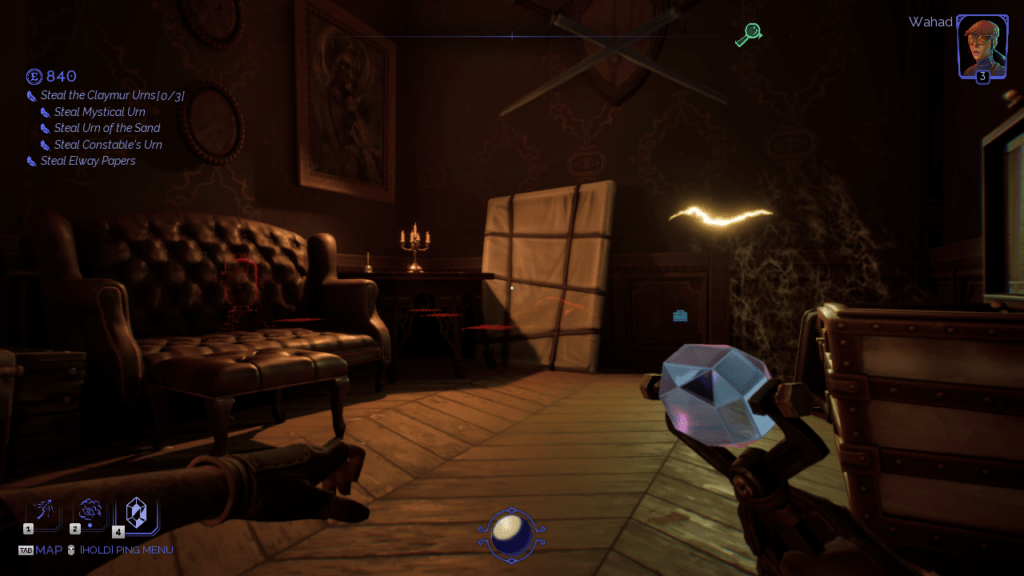
Another layer of complexity comes from optional side missions. You always have a secondary objective you can choose to complete or ignore. The twist is that notes and guard communications you find sometimes relate to the main objective, and sometimes to the side one, so you never really know which clue will lead where next. Unless the side task is simply collecting valuables, in that case, it’s usually obvious because the relevant clues are highlighted in green. But as a thief, you’re naturally incentivized to steal everything you can find anyway, so beyond main and side objectives, there are also tons of hidden valuables, secret rooms, and safes waiting to be emptied.”
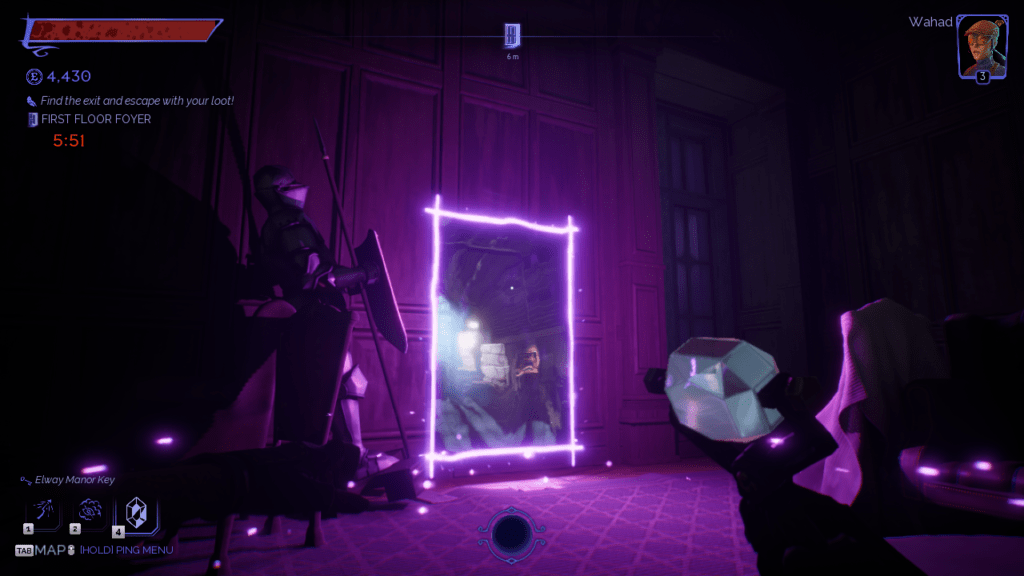
At the end of each completed mission, or if those 45 minutes simply run out, you must find the magical doors to exit the map. And those magical doors always appear in a different location. This is where your knowledge of the map and your ability to navigate really come into play. You have eight minutes to reach the exit on a highly complex map layout, so one wrong turn can mean you won’t make it out, or, in other words, you’ll have to restart the mission from the very beginning.
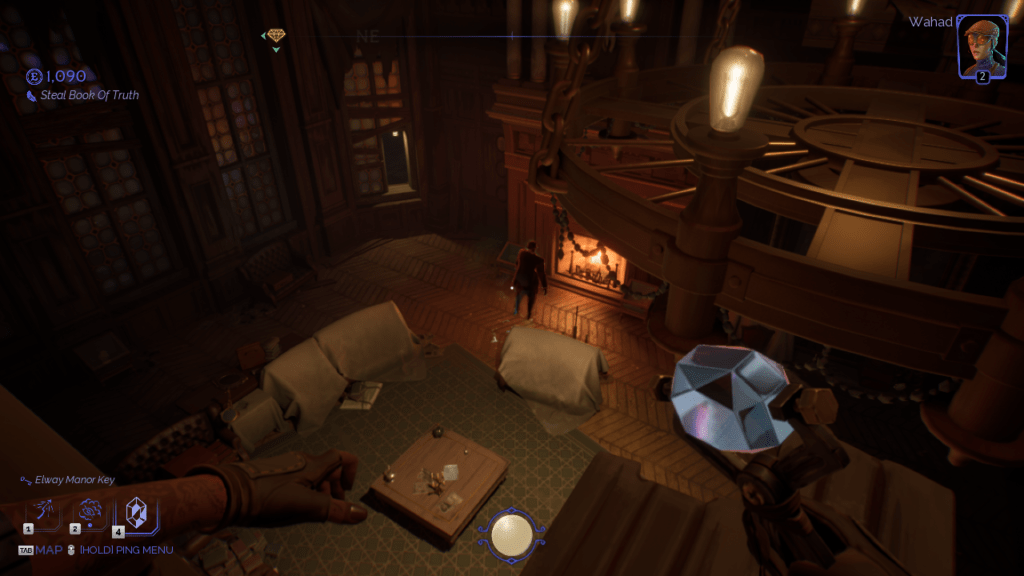
But none of this can be that good if the gameplay mechanics aren’t up to standard. Luckily, in Thick as Thieves, the gameplay is simply fantastic. This is a true stealth adventure in every possible sense of the word. You will have two indicators: how well you are hidden in the dark and how much noise you are making, and both are extremely important during gameplay. If you make too much noise, guards will hear you and immediately start investigating. The same applies if you move through lighted areas. In the game, you will have lighting sources that you can simply turn off to create deeper darkness in which you can move. However, there will also be turrets and evil eyes with purple light that will always watch over certain angles you need to reach specific parts of the map. So at all times, attention, planning your approach, and knowing that part of the map is necessary.
As a thief, you will not be able to kill enemies, but only incapacitate them for a short period of time. So if you wander too much around the map or simply cannot find where you need to go, they will eventually get back up and continue their patrol. I really liked the fact that all guards are very sensitive to every movement in light as well as every sound. They will always come to investigate, no matter how small a part of your body is sticking out, which is really cool. And in addition to regular guards, you will also have ghost guards, who are not blocked by windows or other objects and can reach you if they detect you. Honestly, I didn’t notice them moving through walls, although I think that might have been too much anyway.
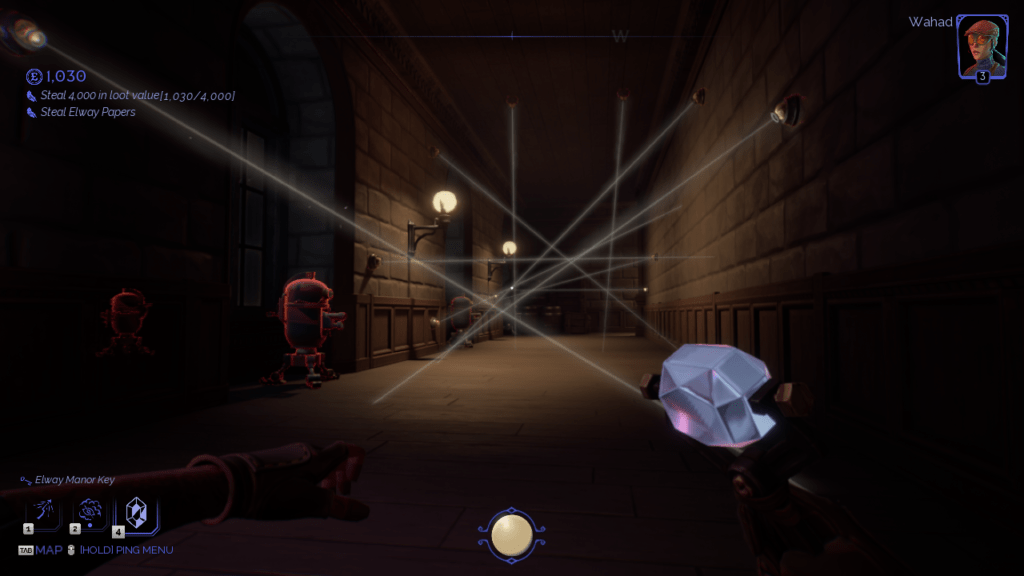
Security, turrets, cameras, floor sensors, and something similar to lasers are placed all over the house, so you always have to pay attention to where you are walking and how you are moving. Fortunately, you will have a diamond with you at all times, which, when held, can show you all traps and guard positions through walls. In the game you also have two playable characters you can choose from: Spider and Chameleon. Spider has a zipline that is very useful for reaching some not-so-easily accessible places, while Chameleon has the ability to take on the form and appearance of a guard.
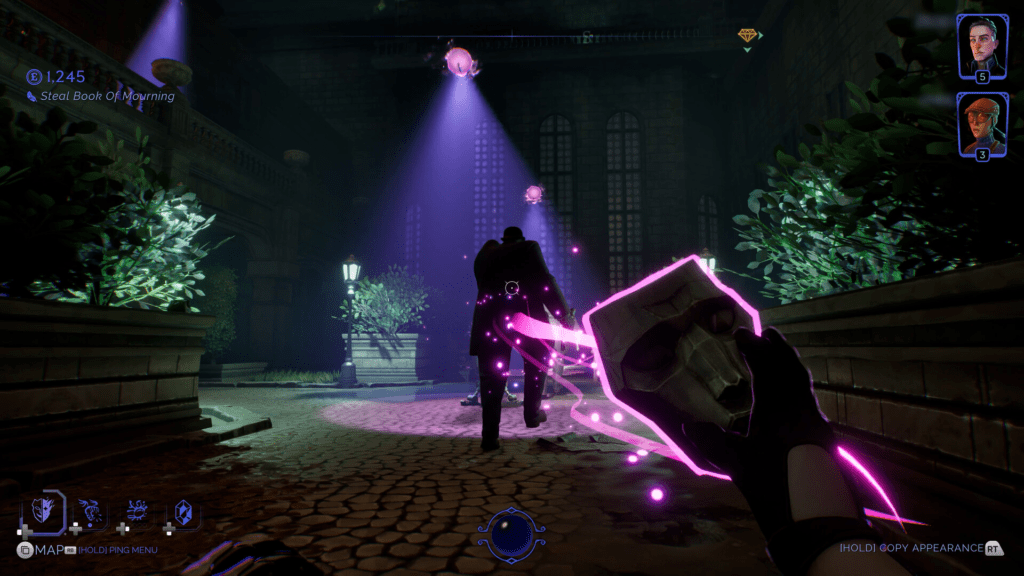
Other tools you can carry include the Pickpocket Fairy, a small, well, fairy that steals items you need from guards, such as keys. The Insult Fairy sticks to surfaces and creates distractions so you can pass by guards unnoticed. There is also a smoke bomb, which is great when the situation gets tense and someone is chasing you.
At the beginning, not everything is unlocked, you will need to purchase some items in order to use them. And items that have a limited number of uses can be refreshed on the map at specific locations. At the same time, there are rifts in reality, a kind of magical stash where you can store the valuables you steal. Because if a guard sees you and knocks you out, you will restart from a checkpoint and everything you were carrying will drop at the place where you were caught. So it is better to always look for these magical stashes on the maps so you can send all valuables directly back to your base, even while the mission is still ongoing.
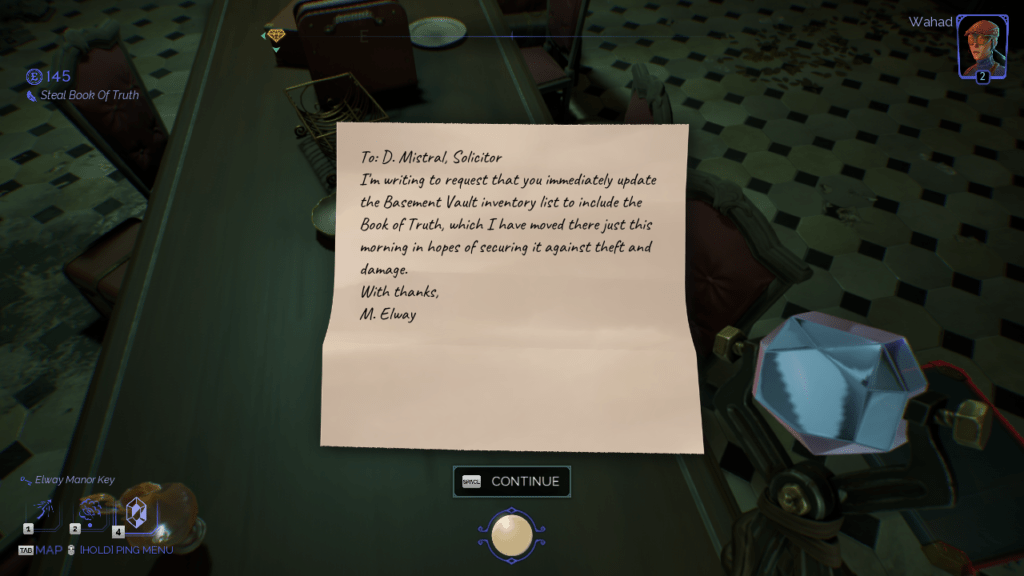
The game also has a co-op mode, which we tried a few times. Something had to remain from that original concept after all. And I have to say that co-op in this game is excellent! And it seems like some parts of the maps are designed for more than one player, because sometimes it is much easier to complete a task and steal an item while one player draws attention and the other safely reaches their objective.
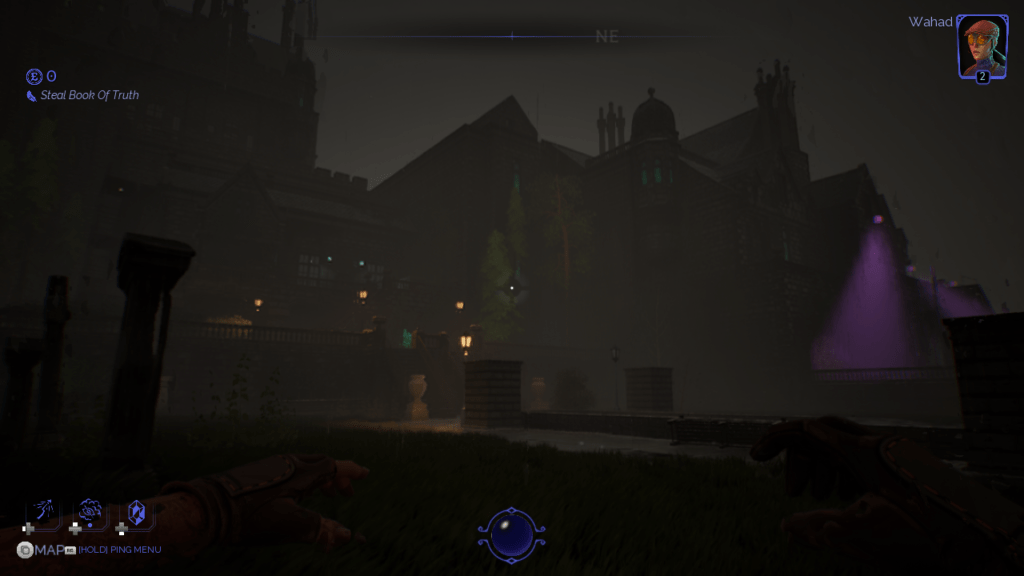
As for graphics and presentation, the game goes for a stylized, painterly approach instead of photorealism, with expressive facial features and proportions like in animated films, with a lot of detail in every corner. It goes without saying that the entire presentation reminded me a lot of Dishonored and Thief, but with a unique, slightly dark charm. The world is set in an alternate 1910s, so you have a mix of Scottish baroque style with magic and mild steampunk elements, or what you might call magic-punk. The dominant colors here are darker and colder tones, with a lot of gray, brown, and dark green, along with the usual bright lights when the scene requires it, as well as magical artifacts and warm indoor lighting. All of this together creates a very strong and lively atmosphere that pulls you in from the very beginning. And on top of all that, I have to praise the animations, which are simply excellent, as well as the little character quirks and gestures of the main characters you play. The game really has style, and that deserves praise.
To be honest, it feels like this maybe became a solo/co-op game a bit late in development. After so many hours in the game, I started thinking it might have been better if the project had originally been designed as a single-player experience, or at least co-op from the start, but with a stronger focus on story, missions, maps, and environments. I am not saying the maps or environments are bad, in fact, they are great, but I believe everything would have worked even better if the initial plan had been to create a single-player experience. Because from everything I have seen, the game has more than enough potential for that. And I am a bit sorry that this is not a more developed story-driven experience spread across 15–20 proper missions, even if they reused all existing map assets for that structure. Although, maybe something like that will come in the future, we will see.
And in the end, Thick as Thieves really impressed me. In the current state of the industry, where we barely get any stealth games anymore, Thick as Thieves is a refreshing little gem. And the best thing of all is that the game costs only five euros/dollars, literally the price of a coffee. Even after spending 10+ hours in the game, I still felt it would have been fine even at around 15–20 dollars/euros. But when I saw it was only five, I was genuinely amazed, because this is basically a steal, and at this price I think it should absolutely be part of your library as a form of support for OtherSide Studios.
What makes it even better is that Megabit Publishing has already announced this will be an “introductory” campaign, which likely means more content will follow over time, whether in the form of updates or paid expansions. We’ll have to see what their long-term business plan looks like, but honestly, I can’t wait to see more of all this.
We would like to thank Megabit Publishing for providing us with a copy of the game for review purposes.
Thick as Thieves (PC)
Thick as Thieves therefore delivers exactly what players have been missing: a fantastic, beautifully designed world, two extremely complex maps that will sometimes make you feel like you’re hitting your head against a wall and getting stuck in them, and gameplay mechanics that feel familiar but are amazing to experience again after a long time, like meeting an old friend you haven’t seen in years. And because of that, combined with its price and everything it offers, Thick as Thieves is truly a title that deserves a place in your game library, no matter which platform you play on. Because for those five euros, you will get far more fun than what you pay for.


