




For over two decades, the world of Terrinoth has been a staple of the board game world. From classics like Runebound to the legendary Descent dungeon crawler games, Fantasy Flight Games established Terrinoth as its fantasy world. Back in 2021, Fantasy Flight Games released the last big entry of the franchise, Descent: Legends of the Dark, modernising it by making it a spectacular mix of 3D terrain and companion app-driven adventure. However, just in April 2026, FFG announced the end of the support. But when one door closes, another opens.

With Terrinoth: Heroes of Descent, Artefact Studio and Publisher New Tales, continue and expand the world of Terrinoth on PC, Mac, PS5 and Xbox Series, as a turn-based tactical dungeon crawler.
Return to Terrinoth
Heroes of Descent is a narrative prequel to Descent: Legends of Dark, but people do not need to worry. As much as Terrinoth is an established world, with factions and heroes, it is still vastly open and unwritten. The story takes place around a year before Legends of Dark. The lands of Terrinoth are in turmoil: Demon-infested barbarians and undead minions are roaming and threatening the realm.
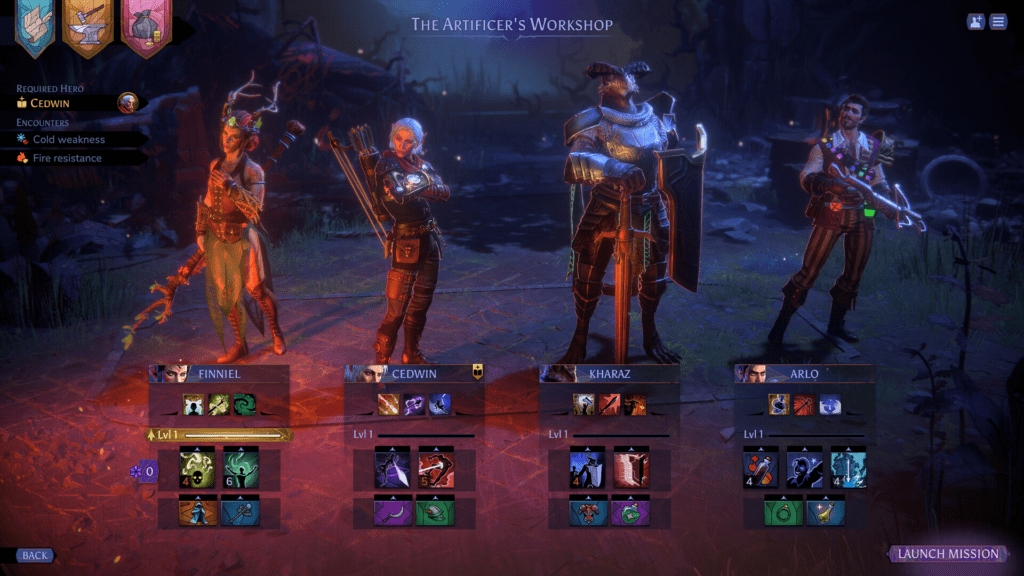
The game begins with draconic fighter Kharaz and dwarven mage Aurta looking for a stolen token in a city, later joined by ranger Cedwin and rogue Myria. But what was supposed to be a hunt for some thieves quickly turns into the city being threatened by undead forces and a hunt for their vampiric overlords. Not long after, you will be joined by cleric Yeshi and druid Finniel, and later by even more companions.
Once you are past the tutorial, the first of 4 campaigns opens. Each chapter contains 5 dungeons that are tied together by cutscenes and narrative, so 20 in total. Depending on the story and dungeon, different heroes are required, but they often bring insight and additional voice lines during your dungeon crawl and are tied to the lore of the place as well. They often give hints at what kind of party you want to build as well.
And depending on which of the four difficulty levels you choose, it is crucial to have a synergising party, or otherwise, you will fail the combat-heavy dungeons.
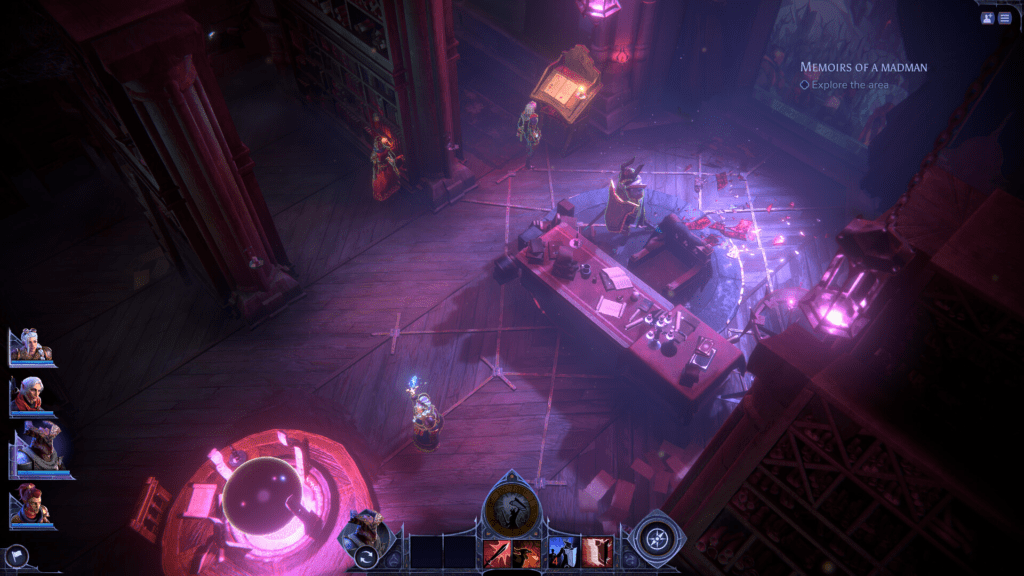
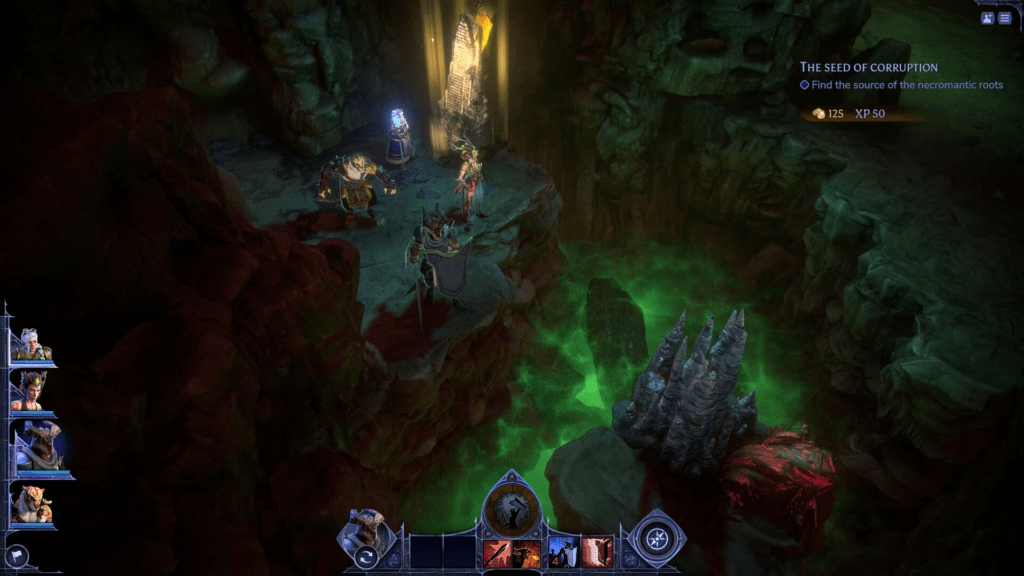
Dungeons are combat-focused with little, mostly linear exploration parts in between, where you find chests, small narrative places or sometimes hidden secrets. Nothing to talk home about, but a pleasant breather between the combat encounters, which often have reinforcements.
Combat and Progression
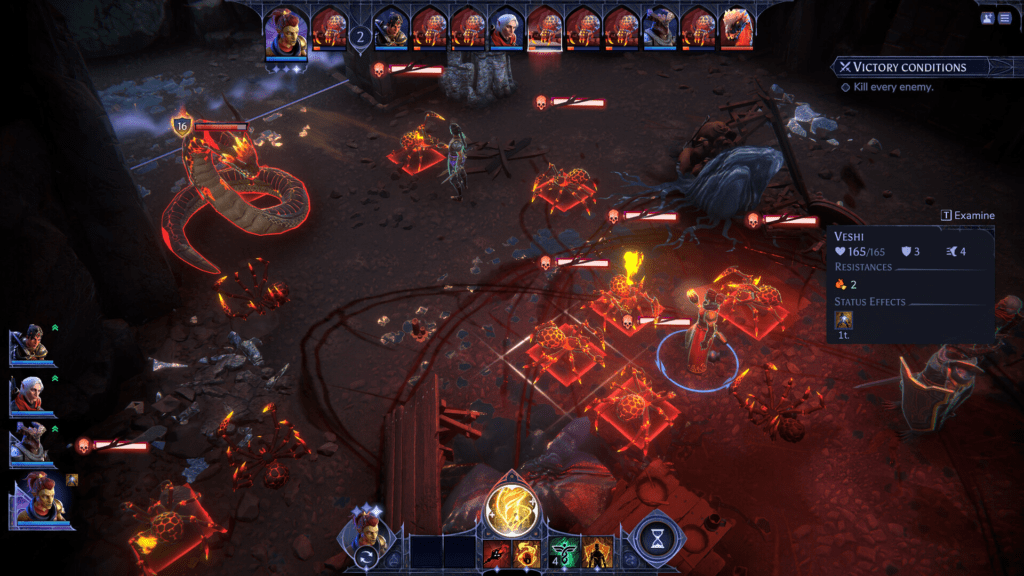
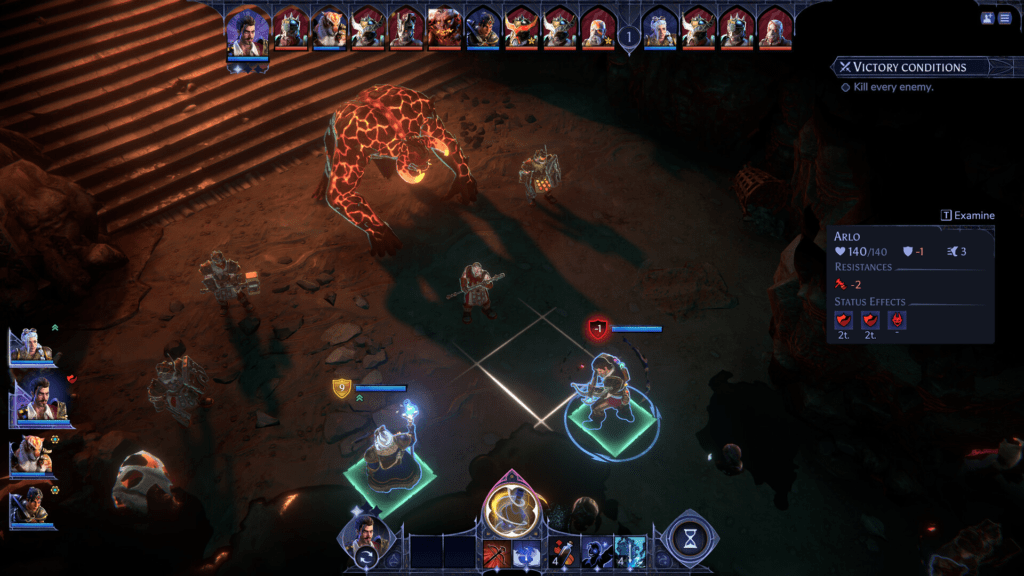
The core of the game is the combat. If you are familiar with turn-based combat, you will feel right at home. Like other games of the genre, you have a certain amount of action points, 3 here, and you can use them to move, attack, cast skills or spells or use your ultimate, use items or interact with special objectives in the environment. Your only other resource is your HP. There is no mana to look after. The more powerful attacks or buffs have limited uses per combat, though, and each hero can only take a limited number of spells or skills with them in each scenario.
Health is replenished after each combat, and when you start an encounter, you can always place your heroes, so it never gets unfair. Additionally, you can wear two pieces of armour or items, which increase things like crit damage, resistances or trigger powerful buffs on specific use, such as a trinket that buffs the attack of the target, whenever you heal it. Later on, you can even find character-specific gear that suits their playstyle and is powerful.
Dungeons are also divided into different height levels, which can influence movement, range and line of sight. Higher-positioned enemies and party members have better range. You also must be careful when you cast a spell or do a range attack when a party member stands too close to an enemy. Sometimes they can do collateral damage, and especially on higher difficulty settings, I might have once or twice accidentally downed one of my melees.
Once you finish a scenario, you are rewarded with experience and money and all the items you have found in the dungeon and an additional reward you can choose from. The others move over to the shop.
As usual with experience, you gain a level up. In Terrinoth, in Terrinoth you can choose between two different stat increases for each character at each level up and get skill points for your skills and spells, which you can freely distribute between dungeons to modify your spells. So, for example, your blizzard will do additional bleed damage on the next map. These modified skills can create great synergies between different characters.
Especially when you play in up to 4 player coop, you should coordinate who picks who and what spells and modifiers you take.However, you do not need to worry about missing out on items or skills that you miss or did not select in a dungeon. The shop will be filled with them, and you can buy them for gold.
Tech, Graphics and Sound
From a technical standpoint, the game does a good job, except for maybe a slightly long loading time in the beginning. The framerate was stable, and we didn’t encounter any noticeable bugs.
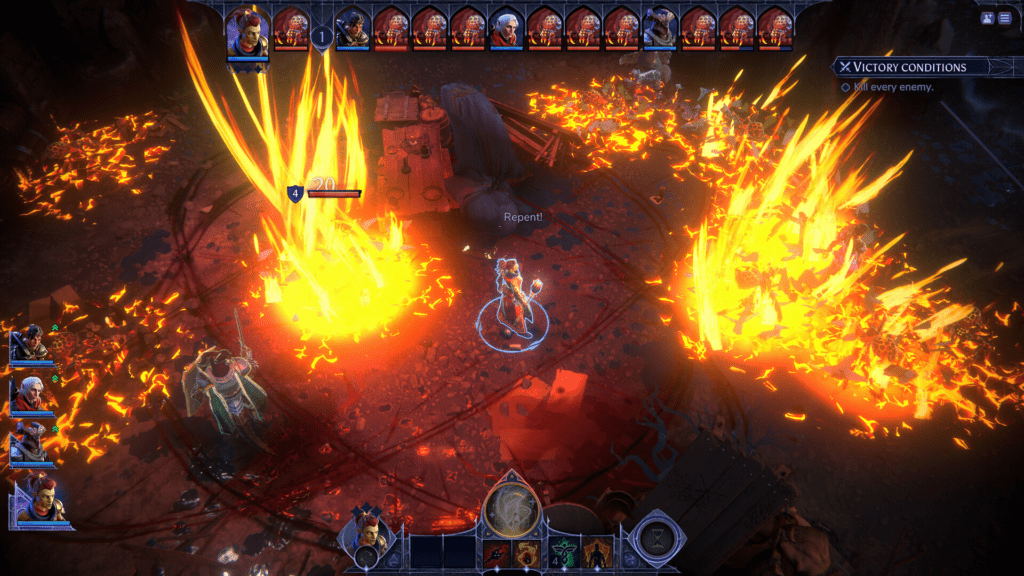
The stylised graphics are a perfect compromise between dark high fantasy and colourful board game aesthetics. Especially in darker places, supported by torches or light, the game looks good. However, the vast and colorful elven ruins do have their charm as well. Magic effects look impactful, and the hit feedback in combat is satisfying. Especially spells later in the game do a fantastic job of looking like they hurt. The same goes for the agile attacks of the rogue and something like the tank charge or jump. Especially when they crit, you can feel the oomph and see the health bars just go down.
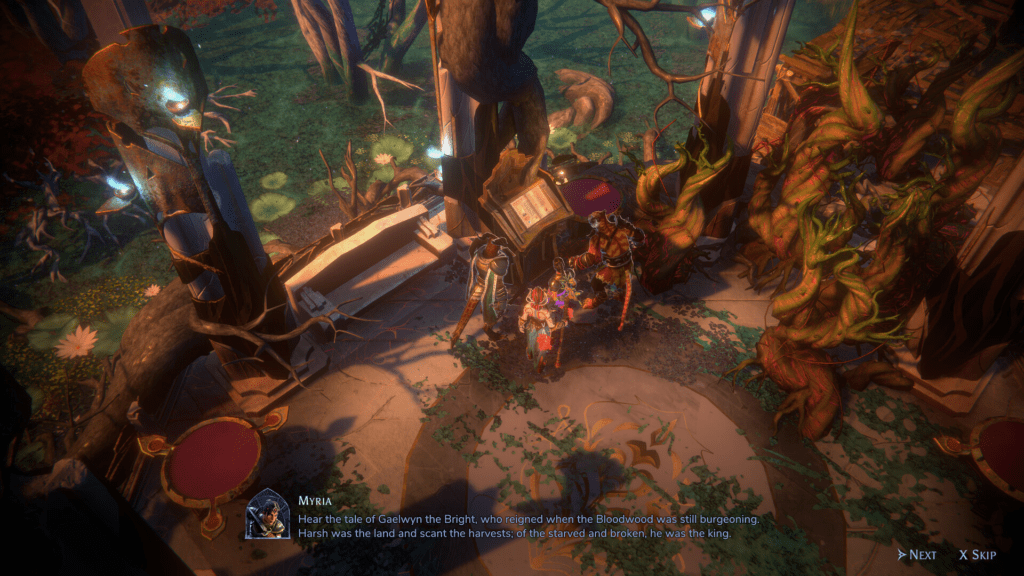
The soundtrack does a solid job. The true audio highlight, however, is the great voice work. From the beginning, the voice cast gives every single member of the party more character. And the narrator even has the option between a male and a female voice.
The UI is kept clean and simple and is never overwhelming, and the game works great with mouse and keyboard and direct controls alike.
When I first saw the demo popping up on Steam out of nowhere, I was quite sceptical of Terrinoth, as lot of boardgame adaptations tend to be either too close to the boardgame or simply bad. I can luckily say that neither is the case for Terrinoth, and I really hope Artefact Studios and New Tales will expand on the game and the world, because it has a lot of potential.
We would like to thank New Tales for providing us with a copy of the game for review purposes.
Terrinoth: Heroes of Descent (PC)
Terrinoth: Heroes of Descent is turn-based dungeon crawler with a clear focus. Artifact Studios and New Tales do not try to chase the vast and gigantic narrative of a Baldur’s Gate. Instead, it focuses on what made the boardgame Descent so good. Quick and fun multiplayer dungeon crawls, with fun encounters to solve, satisfying progression and a linear, but fun story with good voice acting.


