




As time goes by, I find myself liking the incoming wave of roguelite games more and more. However, I don’t think this is a case of me simply going soft on the genre, it’s that developers are finally trying to break the mold and create something concrete, different, interesting, and genuinely exciting. Stupid Never Dies is exactly one of those titles. To be completely honest, when it landed in my lap a while ago so we could prep this review in time, I expected something twisted and crazy, but not a roguelite. I expected something more akin to Romeo is a Dead Man, or rather, the design and visual style heavily reminded me of it before I actually sank my teeth into the game. But to my fortune, or misfortune, I was greeted by roguelite progression systems, and I just thought, “Alright, let’s embark on this adventure,” fully expecting it to be a bit more agonizing than I anticipated.


Stupid Never Dies is a game by GPTRACK50, a studio helmed by Hiroyuki Kobayashi, widely known for his time as a producer at Capcom working on some truly phenomenal games. The moment you hear that, you know this title, even though it’s the studio’s debut, comes with serious pedigree, hinting that this is going to be a high-quality release. And I have to admit, my assumptions were not in vain. Even though this is an AA game, as some prefer to label titles of this scale, it is executed fantastically, boasting a stellar story, thrilling mechanics, and, of course, brilliant gameplay. But let’s start from the beginning.
In Stupid Never Dies, the main character is Davy, a zombie sitting at the absolute bottom of the post-apocalyptic food chain following a massive war between humanity and… well, something surreal. Davy unfortunately became a zombie and was subsequently drafted into the great war between the undead and the living. But since Davy is so “brave,” he decided to desert the army and lock himself inside an abandoned shopping mall. When he got hungry, he went looking for food and stumbled upon a beautiful girl who had also fled the war to survive, but unfortunately, got stuck in a freezer and froze solid. The moment Davy laid eyes on her, he instantly fell in love and decided he would no longer feed on humans, settling for whatever else he could find instead. However, Davy soon discovers that he actually has the power to bring her back to life. Yes, Davy, our zombie. But to revive her, he has to assassinate the KOM, or King of Monsters, who is flanked by four generals who stole everything valuable from humanity, intellect, sanity, and practically life itself. So, it is essentially up to Davy to save the human race, albeit for the entirely selfish reason of bringing a girl back to life so he can try to… well, date her. She’s a human, he’s a zombie, a match made in heaven.

But how can Davy possibly save the world if he is trapped inside a shopping mall? On top of that, he is agonizingly slow because he’s a zombie, and not just any zombie, but the absolute worst of the worst, the slowest, and the biggest coward of them all. Well, there happens to be another human in the mall, a rare sight in this world: Dr. Frank. He is accompanied by his chihuahua, Acelino, as well as a stone gargoyle named Goyie who, believe it or not, actively helps him, along with a few other brilliant characters who will prove highly useful to you. Just to clarify, Acelino is half-chihuahua, half-werewolf, and half-human. Yes, you read that right. And he serves as Dr. Frank’s right-hand man. All in all, Dr. Frank somehow figured out that the KOM is hiding in parallel universes, in dimensional layers sitting directly above and below our own, which the KOM modeled after ancient mythologies. Frank built a machine that allows someone, namely Davy, to dive into these worlds and scavenge everything needed to save the planet. So, a toilet bowl serves as your literal portal to other dimensions. Dimensions that will be the absolute key to your progression. Davy sits on the bowl, flushes, and the toilet dumps him into one of these worlds. And since Davy is a zombie, or rather, he is already dead, he cannot die, making him the perfect expendable candidate for this adventure. Oh, and I forgot one incredibly important detail. Since we’ve already established that Davy is painfully slow, to get around the mall faster, he uses a Roomba robot vacuum cleaner. He just sits on it and rides around. Absolutely fantastic!
Before I dive into explaining the layers and how they function, I have to touch on the gameplay. This is a 3D action roguelite, meaning you pilot Davy through these worlds just like you would in a character-action game, because first and foremost, this is exactly that: a stellar action game. While Davy is ultra-slow in the world of the living, he is remarkably fast in this underworld of the dead. This means you can do absolutely whatever it takes to survive. The gameplay is phenomenal, but I must note that it takes a little time to get used to it. You have a light attack, a heavy attack, and several abilities. You start with just one, but over time you unlock more, and you can also pick up single-use items to carry with you. But that’s not all. Davy can actually change his form, and that mechanic is simply fantastic.
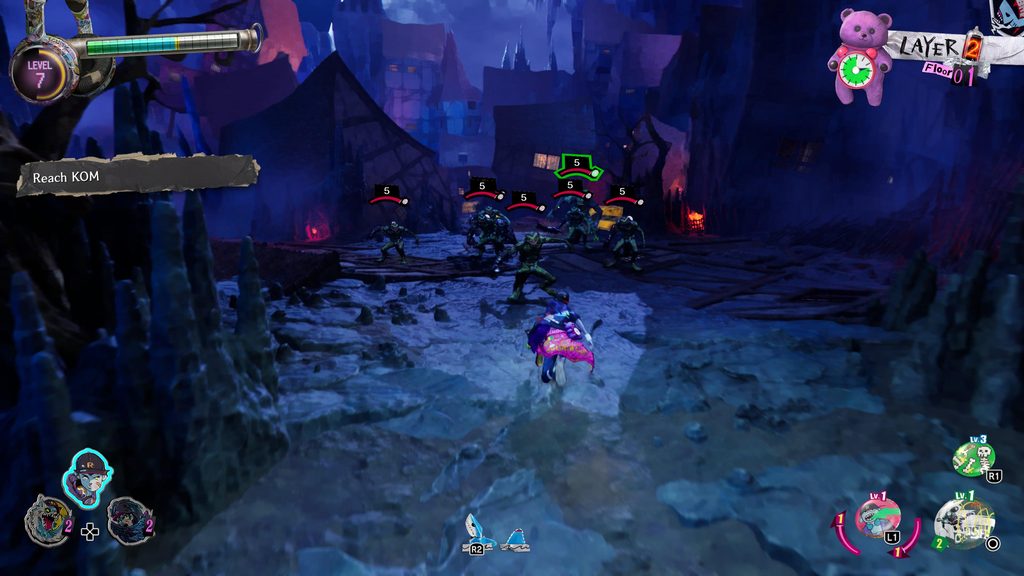
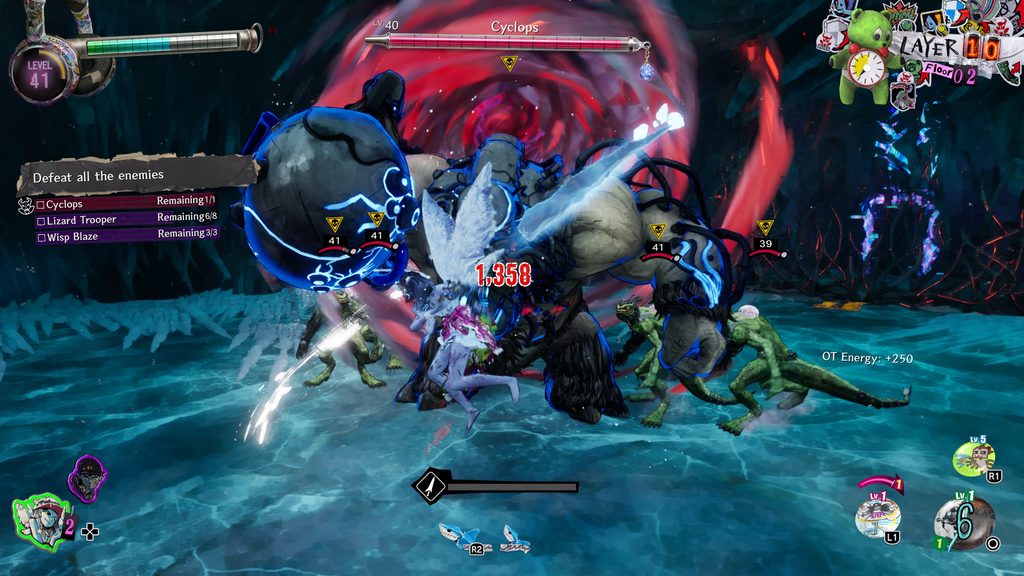
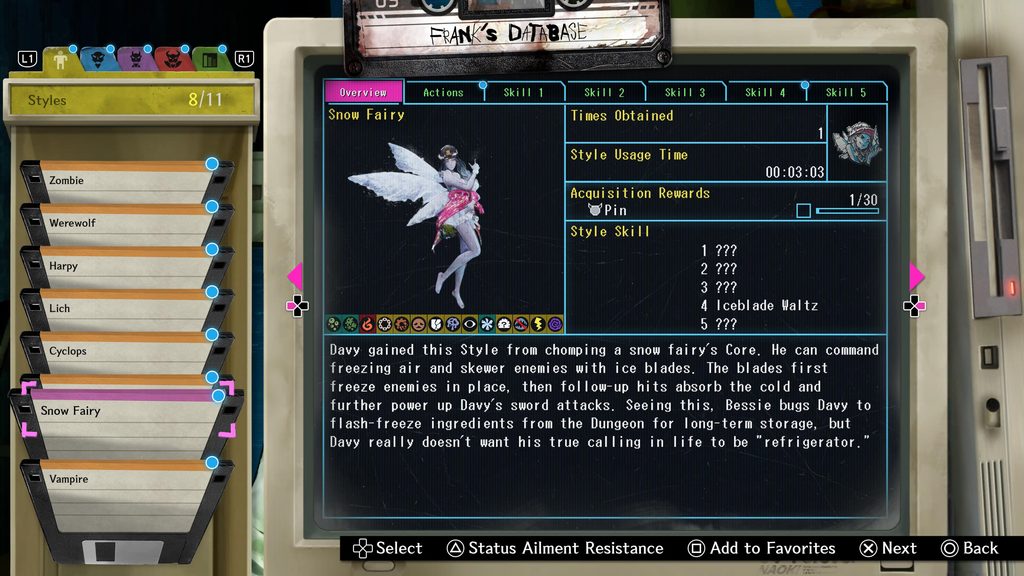
Let me explain that first, because trust me, the game is highly complex in how it operates. It seems cool and simple on the surface, but as time passes, you realize there are a million things you need to pay attention to. The great thing is that the game gradually eases you into all of it, so even after 10 or 15 hours of playtime, you will still encounter something new, a new mechanic, a new trick, new items, which deserves massive praise. Anyway… Davy is a zombie, and to survive, he has to eat. In this world, he has energy, which effectively acts as his health. When you take a beating, your health/energy drops, and Davy has to eat some of the monsters he is fighting to survive, or rather, to heal. However, certain monsters, like elites or mini-bosses, possess a soul that Davy can consume. When he does, he can transform into that exact creature. During a run, you can carry two forms that Davy finds. But a form doesn’t stay with you for the entire run; it only lasts for 3 layers. The game actively forces you to strategize, saving specific forms for when you desperately need them rather than wasting them early. Also, as I mentioned, the worlds are themed around mythologies. Certain forms are exclusive to specific worlds, meaning you must always choose your next layer based on whether it houses the form that best suits your needs, alongside the default Zombie form that Davy always has.
Each of these forms dictates an entirely different playstyle, and each comes with its own rarity tier. The higher the rarity, the better the form. For example, you can be a Legendary Werewolf, a Rare Lych, and so on. Every form is highly effective against specific enemy types, so you constantly have to think about what tool to use in any given moment.
But let’s jump back to Davy and the core mechanics for a second. Because Davy has to bite someone to heal, the game demands relentless aggression. You earn Bites by pummeling enemies, and if you bite enough of them, you can activate the Davy Burst! This is essentially Davy’s ultimate superpower, where all his stats skyrocket and he thrashes around like a lunatic. However, to reach that state, you have to be aggressively proactive and know exactly how to navigate the arena. You have to stay in constant motion, prioritize your targets, and above all, survive. The game features a “(Stupid) Parry,” which is arguably one of its most vital mechanics, as the entire combat dynamic hinges on it. When an enemy charges a heavy attack, telegraphed in yellow, a perfectly timed press of the Stupid Parry button executes a perfect parry, stunning the enemy. This opens them up so you can bite their core/soul if it’s a tough enemy, or absolutely obliterate them if it’s a weaker one. You are constantly juggling several thoughts: how to escape when the swarm gets overwhelming, and when to plant your feet, hit the Stupid Parry, and survive.
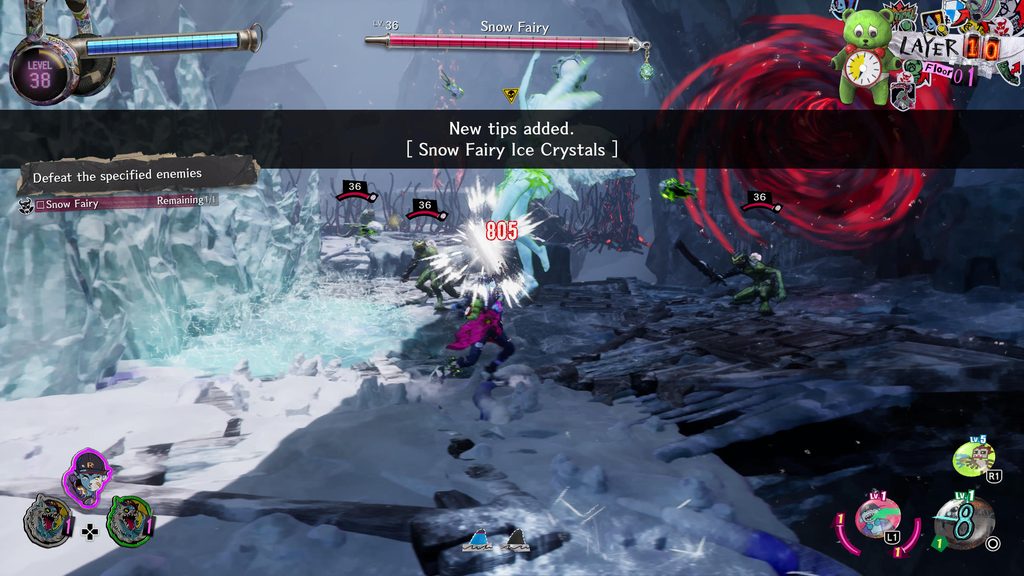
The good news is that you can heal; the bad news, or rather, the difficult part, is that you have to master all of this and become as fast, agile, and resourceful as possible to successfully navigate a dive into this monster world.
Now, this is a roguelite game, which means every time Davy is dumped through the toilet, you are sent into these worlds divided by levels, or layers. As you progress, you encounter tougher adversaries. After clearing a layer, you get to choose your next one. The layers and the levels within them aren’t inherently long. Initially, there are just a few, maybe 3 or 5, but eventually, you’ll reach 20-plus levels. The trick isn’t to clear every single level sequentially, but to choose your path based on how you are leveling up during the run. Because, on top of everything else, you are fighting a strict 12-minute timer for each run. Later on, you can earn bonus minutes by clearing a layer of a specific level, but fundamentally, you have very little time to work with per run. This means you don’t go Layer 1, then Layer 2; you jump around based on what will make you the strongest by the time you face the boss at the end of the run. And how do you get strong, you ask?
Davy starts every single run at level one. As he brawls with the undead, he levels up incredibly fast. So, after clearing Layer 1, you might already be level 15. This means you definitely won’t pick a Layer 3 path that only requires Level 9; you’ll look for a difficulty tier that matches your current power level. Interestingly, this forces you to constantly plan ahead, as I mentioned, regarding which layer to choose next. At first, you won’t know what level is required for the final boss fight, but that is exactly why this is a roguelite, it’s not about beating it in one run, it’s about playing runs over and over again. The good thing is that you have a fixed objective for each run, and once you achieve it, you push forward, diving into a Dungeon that is deeper, harder, more demanding, and guarded by a tougher boss. So, what does the meta-progression look like if Davy only levels up inside the Dungeons?
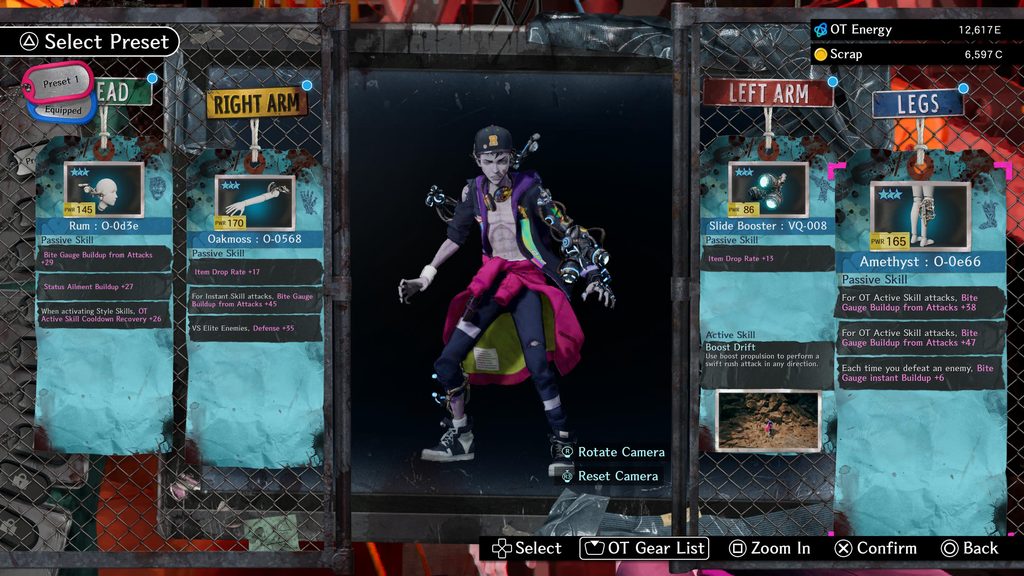
Simply put, Davy hoards various materials to upgrade himself back at the hub. Acelino, the human-chihuahua-werewolf, is there to graft robotic augmentations onto your zombie body, which significantly aid you in your runs. Every part, left leg, right leg, left arm, right arm, and head, grants specific buffs and attributes. However, every part also carries its own Power Rating that you must pay attention to. Sometimes, you will realize you are simply too weak for a specific boss, forcing you to grind a few runs purely to scavenge the raw materials needed to craft these augmentations.
Then there is Bessie, another zombie who helps pull you out of the Dungeon after each level. She also runs a burger joint in the shopping mall, but she cooks her burgers using the meat of defeated monsters. That meat unlocks recipes, and those recipes effectively serve as the mid-run buffs you choose when leveling up or picking up key items. You surely know the drill: the game pauses, presents three options, and you have to pick one to continue. With Bessie, you can unlock better recipes and stronger buffs. Just like your gear and forms, these buffs are divided by rarity, the higher the rarity, the better the bonus.
There are plenty of places to upgrade Davy’s capabilities. You can visit his frozen girlfriend to upgrade the Davy Burst, earning points by gifting her scavenged items you think she might like. You also have monster ice cream, which grants permanent buffs for all subsequent runs.
What’s fascinating is that when choosing Layers, the goal isn’t always to reach the end; sometimes you pick layers purely because they hold the specific resources you desperately need. When selecting a path, you can see what a specific layer hides. It might be energy used for upgrades, gifts, augmentation parts, and so on. You can already see just how complex the progression in this game actually is, and imagine the game constantly throwing new and exciting systems at you that you have to learn and understand. Believe me, even after 10 hours, I still didn’t fully grasp how everything synergized. I had to really dig in and read the menus carefully to figure out how to craft the perfect build. Especially because augmentations can be combined, allowing you to create a build packed with bonuses tailored exactly to your playstyle. Even though this is primarily a melee brawler, some forms rely on Ranged attacks, meaning you always have to plan ahead regarding what you will use for your next run, or a run you’ve failed multiple times, to finally succeed. To some, this might sound like just another chore they don’t want to investigate, but trust me, you need to understand it. When it clicks, it can literally mean the difference between a wasted run and utterly destroying one of the KOM generals.
Once you learn everything, or rather, once you start learning, you realize just how wildly fun the gameplay loop is, and how distinct it feels from other roguelites. The combination of form-switching and hyper-aggressive combat truly gives this game a special charm. Because the game is constantly drip-feeding you new items and systems, it aggressively triggers that classic “let’s do just one more run, who cares if it’s 4 AM” syndrome. Before you know it, the sun is coming up and you’re still tweaking Davy’s loadout to get it exactly right.
The most important aspect is how fluid the gameplay is. I have to admit, when I first started playing and saw that it took Davy half a minute to walk five meters in the mall, I thought, “How is this going to be a fast, dynamic game full of adrenaline and acrobatics?” But the second Davy flushed himself down the toilet, everything made perfect sense! I do have to point out that because you frequently face massive swarms of enemies, there is no lock-on system. I have to admit I sorely missed it in certain moments, especially during Boss fights. I understand the design choice, locking on during pure chaos would only disorient and confuse players, but I genuinely think it should have been implemented at least for the boss battles, which are otherwise fantastic. And I must admit, some of them are brutally difficult until you learn their patterns. Yes, pattern recognition is crucial here, but it’s coupled with a ticking clock, creating a palpable sense of urgency at all times. You can never relax; you are always rushing, because if the timer hits zero, Davy gets sent back to the mall inside a plastic trash bag. Literally!
One thing that did bother me is that the levels aren’t particularly diverse. Even though you practically have five distinct mythological worlds to build your runs from, they don’t offer enough environmental variety. I’m not saying every world shares the exact same layout, but specific worlds heavily recycle level geometry when you dive through the toilet. Considering this is a fully 3D action roguelite, I have to admit that repetition is far more noticeable than it would be in an isometric game. In a top-down view, you simply don’t pay as much attention to the architecture as you do when navigating a full 3D space. I think that is perhaps the game’s only genuine flaw. I don’t know if I could list the sheer volume of complex systems as a flaw. Yes, there are too many of them, and it requires a lot of adaptation and patience to wrap your head around everything, but that is simply the nature of the game. And I find that incredibly cool, because far too many roguelites suffer from being painfully shallow. Stupid Never Dies more than makes up for all those overly simplistic roguelite titles!
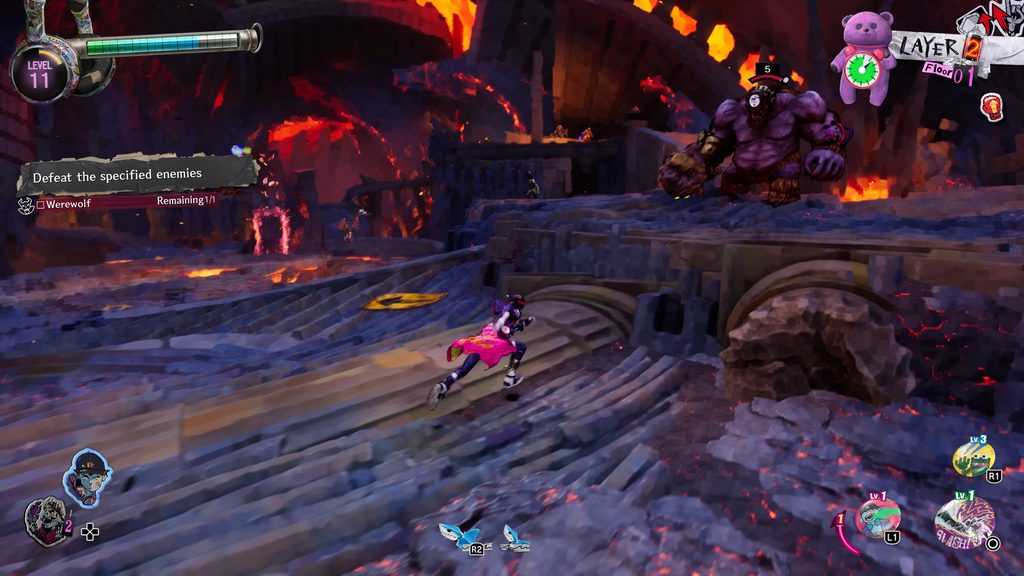
When it comes to graphics, everything is highly stylized. It’s a mix of anime and cartoon aesthetics, and it works wonderfully. The animations are stellar, including the facial animations during conversations. Speaking of which, I have to mention that the voice acting is absolutely excellent. Every piece of dialogue is gloriously over-the-top, packed with hilarious quips and scenarios, perfectly complementing the bizarre world in which Stupid Never Dies takes place. The voice cast did a phenomenal job, and it is a genuine joy to listen to this insane story, along with all the wild explanations and justifications for why things operate the way they do in this universe. On top of that, there is the soundtrack, which you unlock as you progress, bursting with aggressive 2000s rock energy. Overall, the entire vibe of the game feels like a lost relic from the Xbox 360 and PS3 era, except, of course, for the incredibly deep and complex modern mechanics baked into it. That is a massive plus for me, because this is an utterly unserious game featuring fiercely serious mechanics and progression systems. Exactly the kind of thing any roguelite fan would adore.
We would like to thank GPTRACK50 for providing us with a copy of the game for review purposes.
Stupid Never Dies (PlayStation 5)
In the end, considering I had absolutely no idea what to expect, Stupid Never Dies pleasantly surprised me, so much so that I spent several days and nights glued to my PlayStation 5, only to hate myself once I finally checked the time. I was even more annoyed when I woke up at 3 PM the next day, realizing everything I had just subjected myself to just so Davy could resurrect his frozen girlfriend. It is completely absurd, but I absolutely love it! The sheer uniqueness of this title in terms of its narrative, coupled with its brilliant gameplay, is guaranteed to intrigue a massive number of roguelite fans. It might feel slow, clunky, and overwhelmingly complicated at the very beginning, but if you give it a chance, you will quickly grasp the core loop. You will dive so deep down that toilet bowl that you won't know which way is up! That is exactly why this is arguably one of my (new) favorite roguelite games; it feels like it was tailor-made for my tastes. I sincerely hope other players feel the same. For those who are still on the fence, there is a demo available on Steam and PlayStation 5, but trust me, it only showcases a tiny fraction of everything this fantastic game has to offer.


