




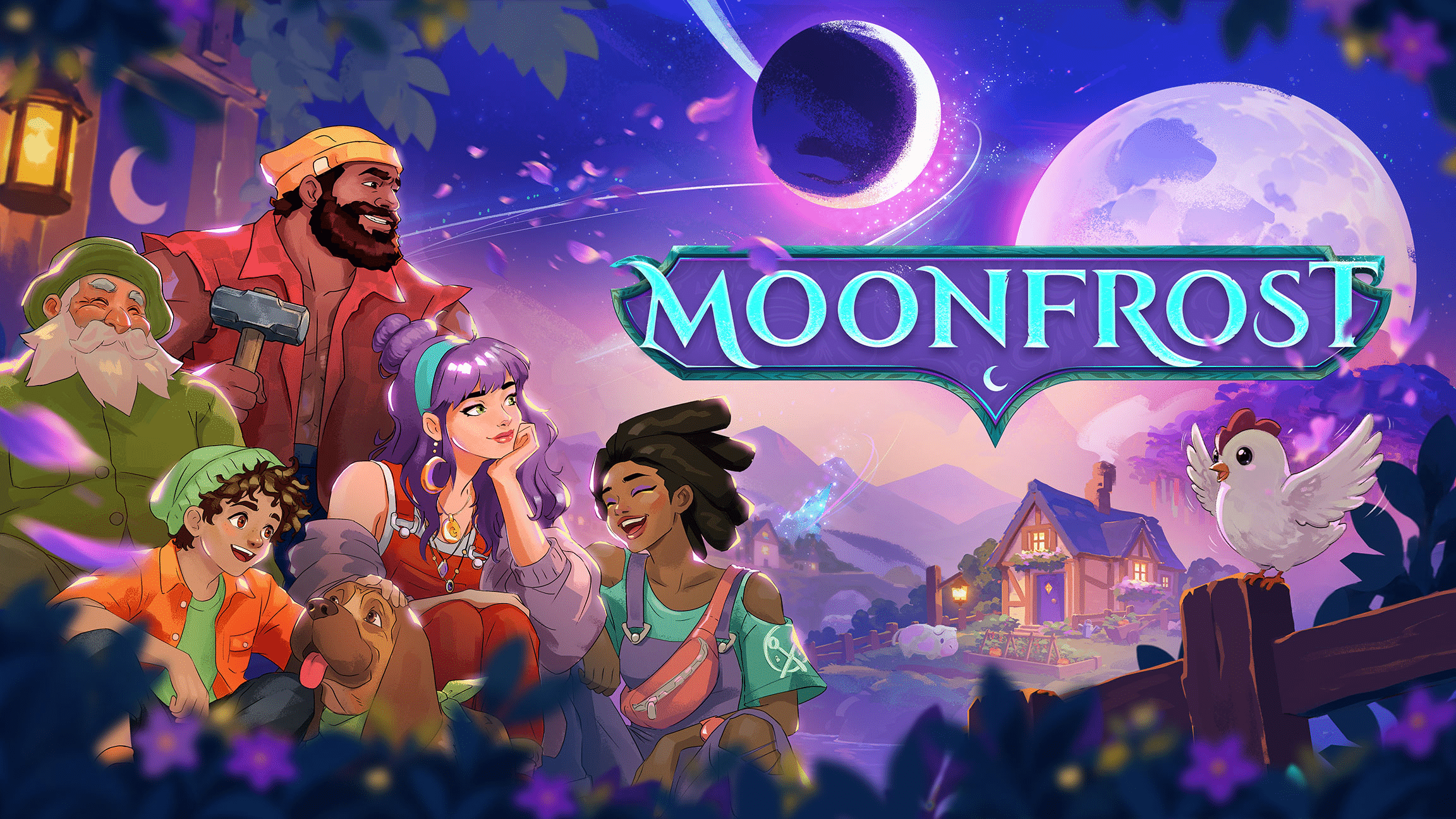


Moonfrost is yet another title in a long line of farming simulations that have either entered or finally exited Early Access over the past few years. Ever since Stardew Valley captured our hearts and consumed hundreds of hours of our lives, games of this genre seemingly sprout up non-stop. Each brings its own original spin and focuses on specific genre elements, though not all are equally successful or fun. Oxalis Games, the indie team behind Moonfrost, has managed to inject a unique charm into their title that isn’t easy to pull off. That is a significant achievement, because in a sea of similar games, that kind of distinct identity is absolutely necessary. It’s a massive win for this small studio, especially considering this is their debut release. The game is currently in Early Access, a phase they expect to last for about six months.

It is quite common for games in this phase to lack content or struggle across various aspects because they were pushed out too early. That is thankfully not the case here; the sheer volume of content is more than enough to keep you entertained for hours on end. I’ve personally crossed the 15-hour mark, and I still haven’t finished the available story or completed everything I set out to do. In that regard, it reminds me of one of the best recent farm and life-sims, Fields of Mistria. Much like Mistria, Moonfrost offers an Early Access build that is genuinely worth supporting and will keep you thoroughly entertained without drowning you in game-breaking glitches. Of course, as with any game in active development, you need to temper your expectations and keep in mind that bugs and missing features absolutely exist. But alongside those growing pains, you get gorgeous art, an engaging narrative, and those deeply comforting mechanics life-sim gamers know and love.
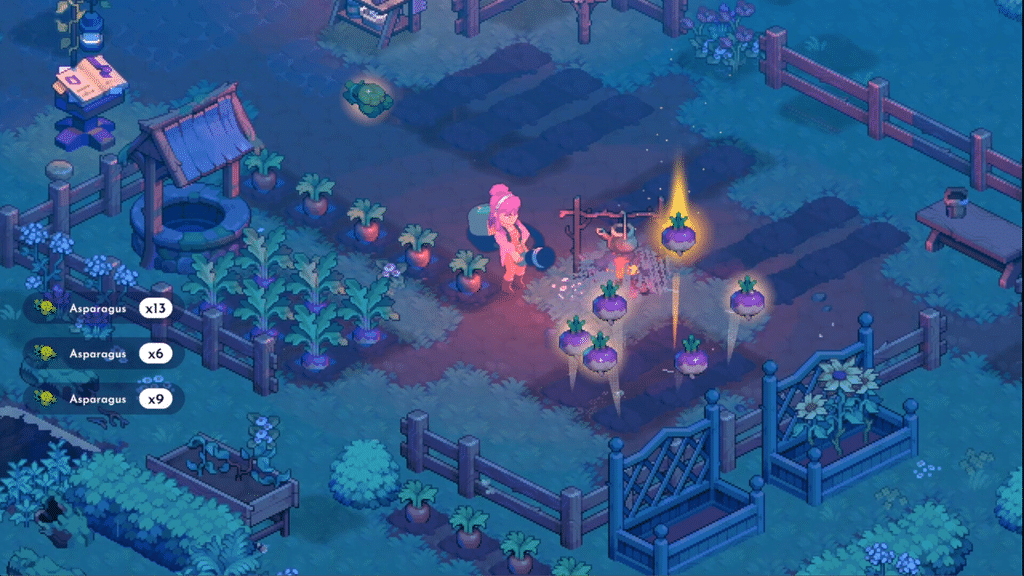
The most crucial element of a game like this, aside from potential romance options and the story, is the core farming and from-scratch building mechanics. Moonfrost follows the traditional, expected steps of the genre, which is exactly the area where you shouldn’t experiment too heavily. You use tools to till the soil, plant and water seeds, wait for them to grow, harvest your crops, and sell them for profit. Where the game gets wildly original is how you acquire and sell these items: you buy seeds from vending machines and sell your goods by completing orders via your in-game smartphone. That modern spin is exactly what gives Moonfrost its unique identity. Combined with breathtaking pixel art and subtle elements of magic, it creates a distinct charm and perfectly sets the atmosphere of this mysterious world.
When it comes to building your house and crafting items, the game makes excellent use of its isometric perspective. You construct your house wall by wall, and the process is incredibly intuitive. You can build as many rooms as you want; there are no arbitrary restrictions as long as you have the required materials. An unfurnished room with stone floors and bare walls doesn’t cost much, but as you unlock decorative flooring and stylish wallpapers, you’ll have to put in a bit more elbow grease. This requires processing resources through several specialized machines. Alongside your standard woodchipper and metal smelter, there is a loom, a dye station, and a processor. The processor is particularly interesting because you use it to craft more modern components, like biofuel, wires, and screws.
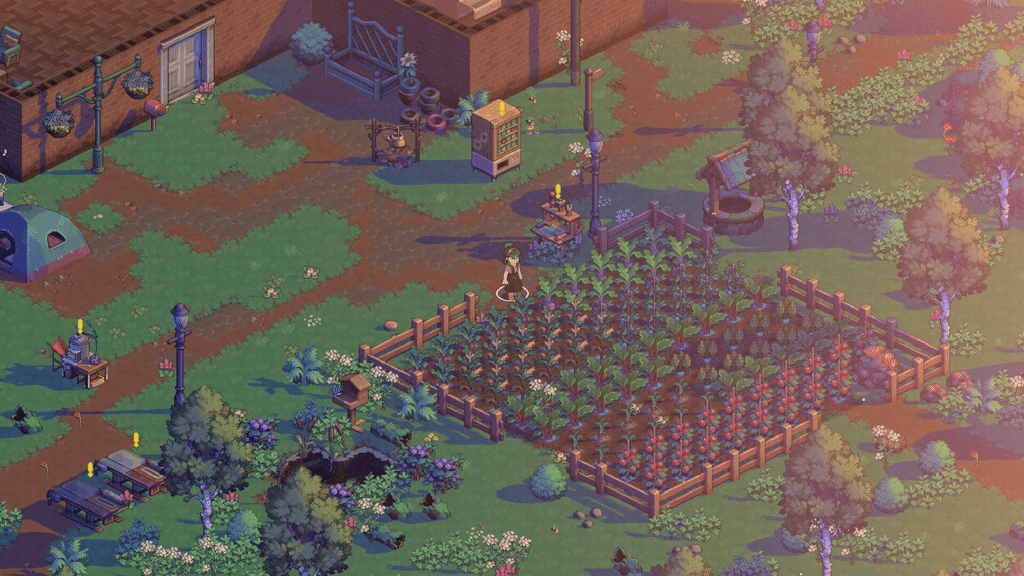
The processor is also memorable to me because I “cleverly” wedged it between two other workshops and spent an embarrassing number of hours completely forgetting it existed. I racked my brain over a quest that demanded I craft wire, genuinely believing the game had bugged out. I suspected every possible glitch until I accidentally clicked on the processor and promptly facepalmed. So, take my advice: be smarter than me and remember where you place your machines. If you ever find yourself wondering where to get wire, you make it in the processor. The processor that actually exists, provided you build it in a visible, accessible spot.
Beyond the resource processors, you have two vital workstations: the tool bench and the decor bench. The former is your classic hub for crafting all available tools, which unlock sequentially as you level up. The latter introduces a highly engaging mini-puzzle mechanic. Whenever you craft a decorative item for the very first time after unlocking its blueprint, you have to complete a jigsaw-style mini-game. It’s incredibly simple but surprisingly fun: you basically recreate the image of the item by snapping its broken pieces into the correct slots. You start with just a few pieces, but the blueprints get progressively more complex. I found this puzzle relaxing every single time, despite my initial worry that it would quickly become tedious. It perfectly breaks up the monotony of digging, planting, and gathering resources.
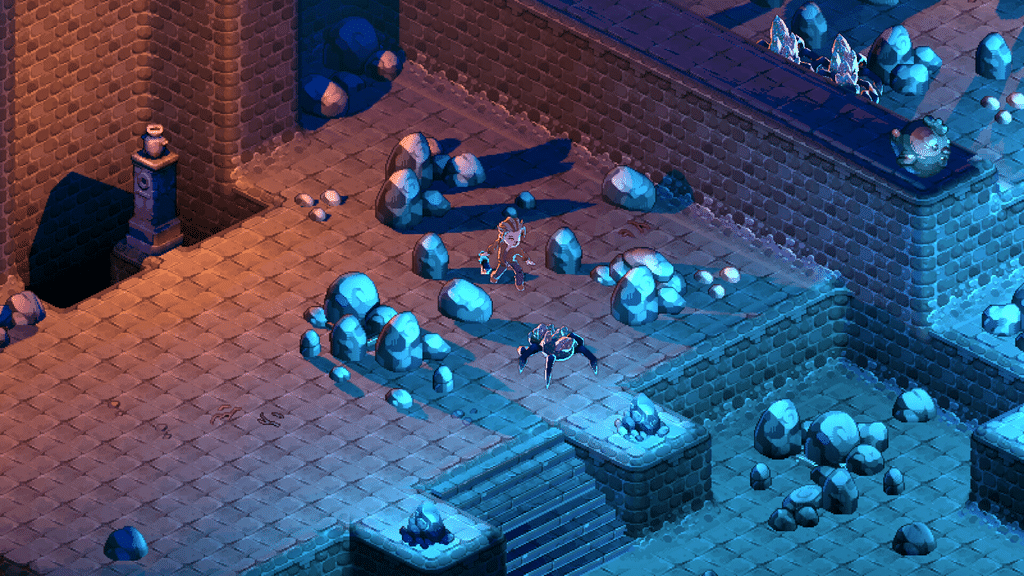
And that isn’t the only puzzle in the game. The local caves feature environmental puzzles you have to solve to delve deeper, something akin to Luma Island, though noticeably easier. You essentially just have to hunt down specific buttons to ignite crystal lights above the doors leading deeper underground. I sincerely hope they expand on these puzzle elements, as they add wonderful depth and variety to the core loop.
Speaking of the caves, it is important to note that the exploration loop is very similar to what we’ve seen in countless other genre staples. You have a main entrance hub where you are usually greeted by a mining-specific NPC. In this case, it’s a remarkably handsome, muscular dude whose name completely escapes me. I spent ages looking for him across the map later, but he seemingly vanished into some NPC limbo. Anyway, he greets you and hands out your first quest. Once you complete it, you are free to explore. Early on, this is punishingly difficult, and you won’t get far. Your stamina drains aggressively fast as you smash rocks and mine ore, and the food you consume barely helps restore it. I strongly suspect this is tied to a rather nasty bug that artificially inflates the difficulty, more on that in a moment.
The caves are, naturally, home to hostile creatures, introducing the combat mechanics. Unfortunately, this is one of the game’s biggest glaring flaws. The combat simply isn’t fleshed out. Your attack animations take far too long to execute and physically lunge your character forward, making it exceptionally difficult to reposition or dodge incoming strikes. It is practically impossible to avoid taking damage, and your health depletes alarmingly fast. As far as I’m concerned, overhauling this needs to be a top priority during Early Access. And this isn’t a glitch; it is a fundamental design issue with the attack animations for both the player and the enemies.

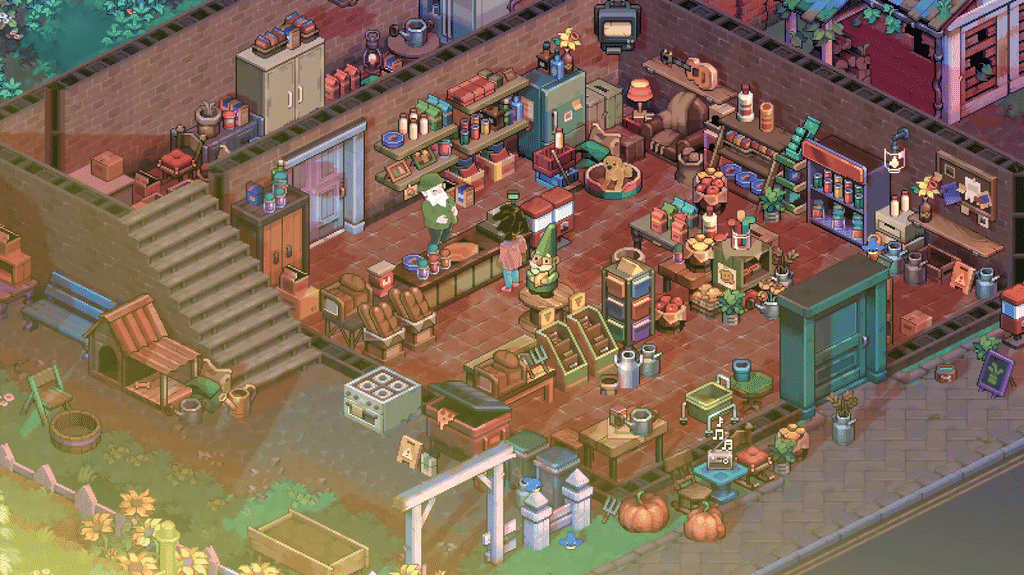
While the cave exploration and combat feel frantic and exhausting, the overarching pacing of the actual game is brilliantly executed. There is absolutely no rush. Every quest-giving NPC is available 24/7, meaning we don’t have to stalk them according to strict daily schedules. The two main NPCs who help you settle in early on, Ash and Walter, are wonderfully written and memorable. This is heavily elevated by the gorgeous art, both of their in-world sprites and their beautifully drawn dialogue portraits.
The game immediately establishes the central mystery of its world: a second moon that shattered, raining debris down onto the planet. Because of this recent celestial catastrophe, the vast majority of the town has been destroyed. Your task is to help get the community back on its feet while simultaneously unraveling the mystery of the shattered moon, and the mystery of your own identity. The game opens with your character simply materializing in a forest, seemingly awakened by a mysterious, magical voice. The narrative lays a highly promising foundation, and I am genuinely excited to slowly piece this story together.
While the art and narrative are rich and deeply atmospheric, the UI and Settings panels are painfully barebones. The UI feels a bit too flat and disjointed from the game’s otherwise magical aesthetic. The Settings menu features a grand total of six options. An “Unstuck” button is glaringly absent, despite being desperately needed. You only get basic sliders for audio, rudimentary graphics settings, and language toggles.
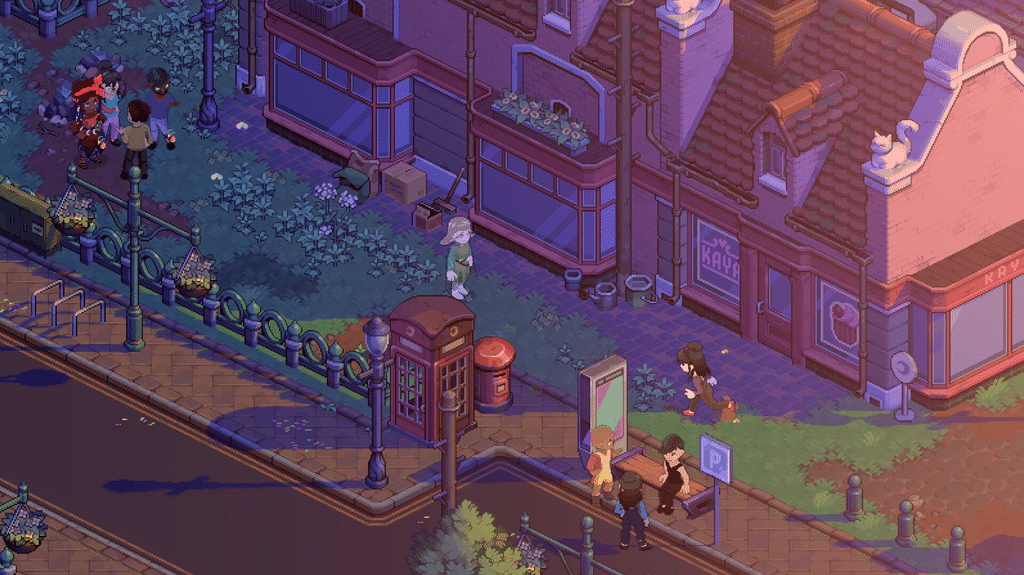
I bring up the need for an “Unstuck” button because getting trapped is one of the more severe bugs I encountered. Naturally, bugs are fully expected in Early Access, but I’ll list a few so you know you aren’t going crazy if they happen to you. My character got permanently wedged between a well and a fence; my only option was to force-quit the game and restart the entire day. There is also a specific fishing dock that acts as a roach motel: if you walk down onto it, you can’t walk back up because it isn’t level with the terrain, and the game lacks a jump button.
Then there is the aforementioned cave bug. When I eat a meal, it restores nowhere near the amount of stamina the tooltip claims it should. Worse, if I have a stacked pile of the same food item and click to eat one, the entire stack vanishes, and I still barely get any stamina back. This is exactly what makes the early cave exploration such a brutal slog, and it desperately needs a hotfix.
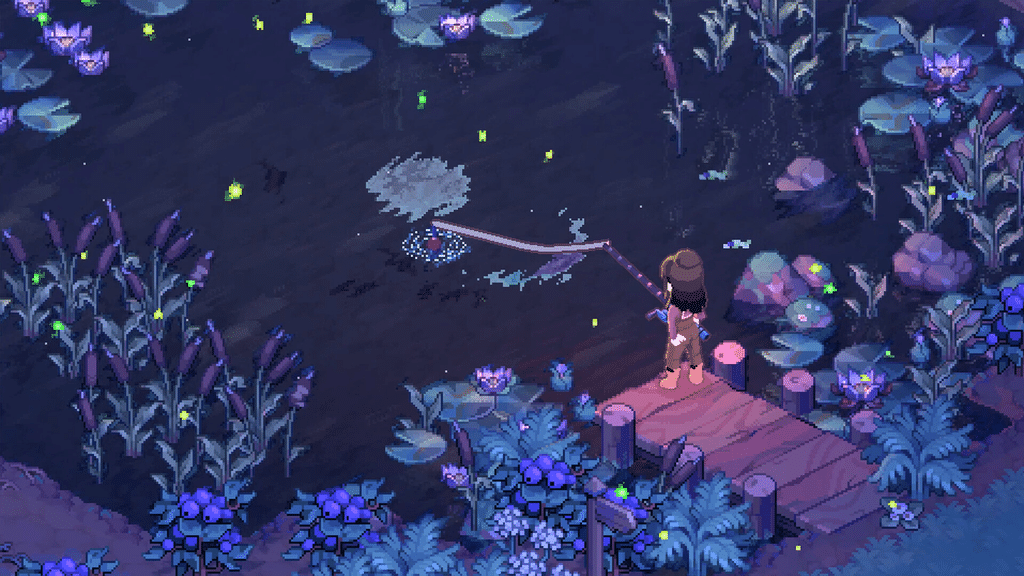
Despite these rough edges, Moonfrost brings a wealth of fantastic ideas to the genre. The game racked up over 50,000 wishlists heading into Early Access. If you were part of that number, or if this is the first time you are hearing about the game and you are on the fence, consider this your sign to jump in. I firmly believe that Moonfrost will easily enchant any fan of cozy farming sims, and with a bit of time and polish, it will cement itself as yet another massive success built on the shoulders of the genre’s beloved giants.


