


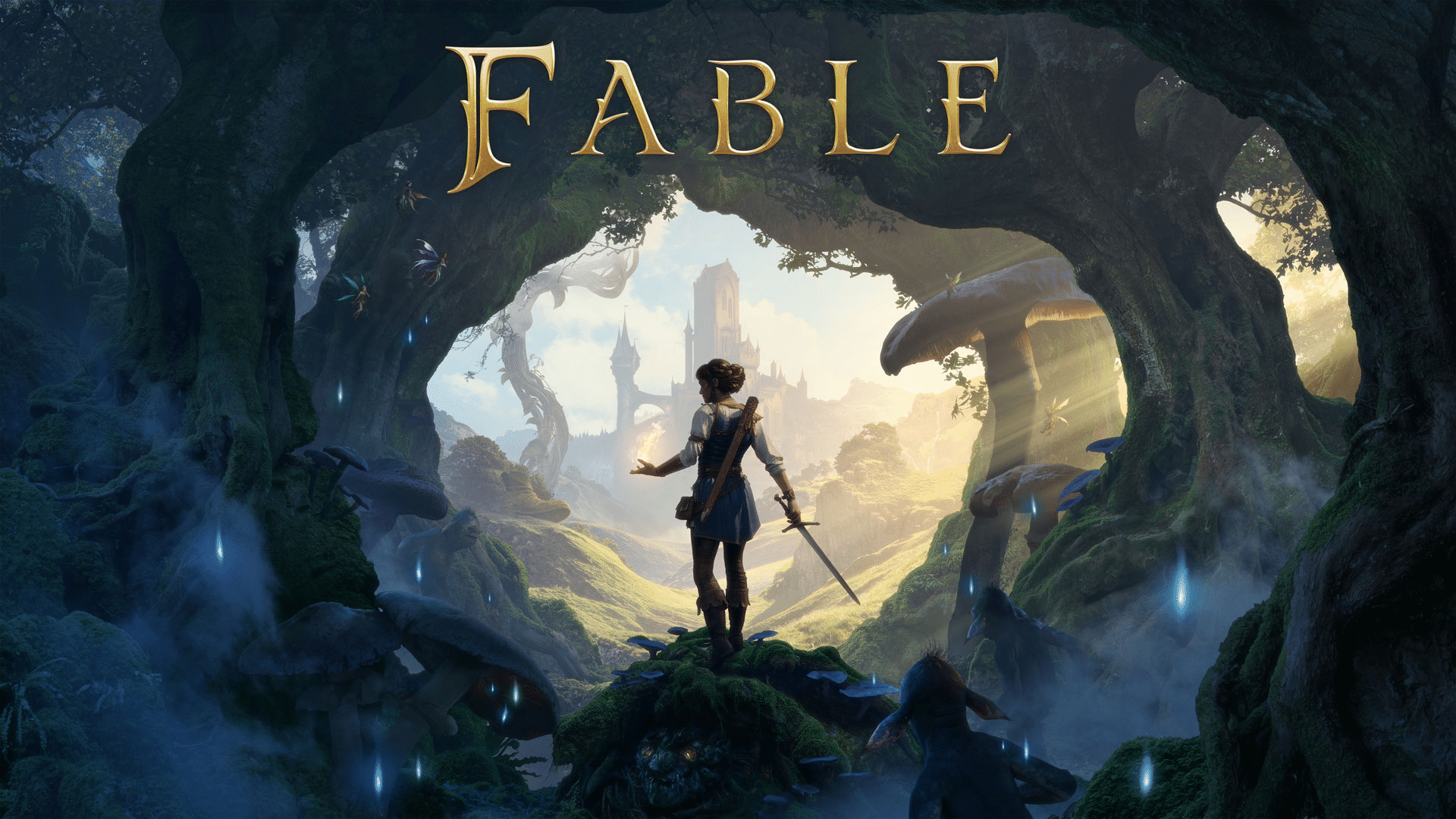


Fable was a game that defined a particularly dark period of my high school years. Naturally, I mean the original Fable that came out over 20 years ago. Alongside Halo: Combat Evolved, it was what people loved to call a true “system seller.” Gorgeous graphics, a fantastic story, stellar action, and a slew of features that were completely unprecedented in RPGs at the time. This is exactly why there is such massive hype for the new Fable, currently in development at Playground Games, a studio we all know and love for the Forza Horizon franchise. We didn’t get to actually play the game at this year’s Gamescom, but we did get a hands-off developer-led playthrough to absorb everything they had to show. And now, almost two weeks after returning from Gamescom, we’ve gathered the strength to share what we saw and how it all looks.

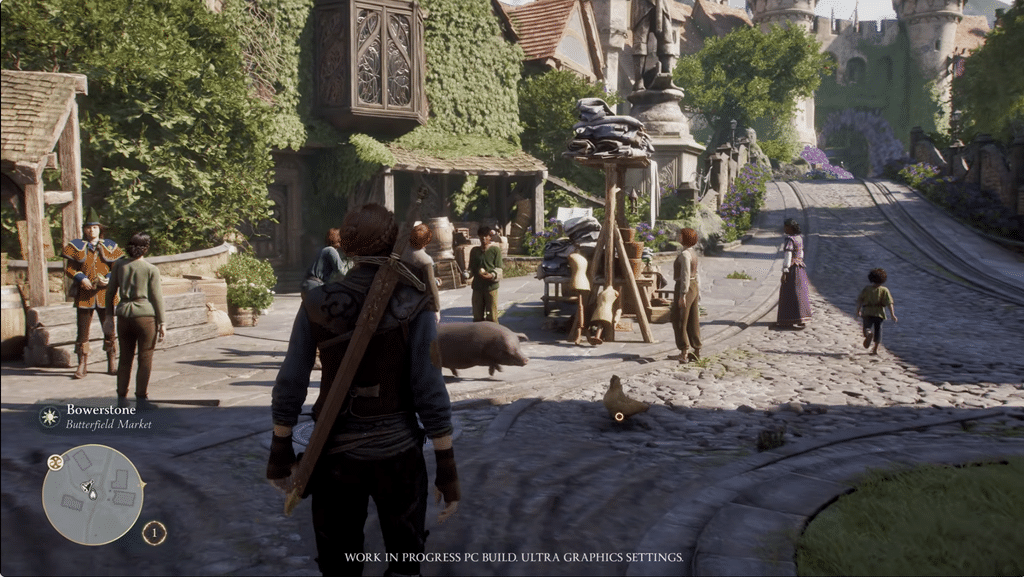
Even before the expo kicked off, Xbox announced that Fable would receive a live demo theater presentation for the very first time. Playground Games played the game live in front of an audience, demonstrating the gameplay and showcasing what our new “Hero’s” adventure looks like in real time. Unlike a traditional trailer, there was no need to slice everything into frantic two-second cuts to blow our minds. Instead, we got a much longer, sustained look at a single mission: exploring Bowerstone, chatting with characters, making choices, and navigating a few concrete combat encounters. Xbox later released the full 18-minute version of this presentation online.
Bowerstone was the first thing that truly grabbed my attention. If you played the original Fable games, you know exactly how vital this city is to the franchise’s identity. Playground Games didn’t just bring it back; they crafted a massive, dense, and vibrant metropolis that actively tries to feel like a real place, rather than just a sprawling corridor you sprint through to reach your next main quest. According to the stats shared by the team during the presentation, Bowerstone boasts over 400 NPCs, more than 30 shops, and over 130 houses. Even more impressively, you can physically enter every single building, and a massive number of those houses can be purchased if you have the coin.

That might sound like a generic feature checklist you’d expect from any big RPG, but the way Playground Games presented Bowerstone is far more important than the raw numbers. The city is bursting with people who have actual routines, jobs, families, and homes. Walking the streets, you don’t feel like you’re just surrounded by generic NPC mannequins waiting for you to walk up and hit the interact button. There are barbers, merchants, shop owners—people simply living their lives—and you can meddle in their stories as much as you see fit. Even the shop names are crafted in that signature Fable style; one storefront shown during the demo was named “Stitch Please.” That is exactly the brand of slightly goofy, distinctly British humor I expected from Fable, and it’s something I’ve sorely missed in modern RPGs. The physical design of Bowerstone left an even stronger impression. The city is incredibly vertical and winding, packed with varying elevations and buildings practically stacked on top of each other. A central castle dominates the skyline, while smaller houses, shops, and alleys cluster around its base. Everything looks a bit crooked, a bit exaggerated, and wonderfully fairytale-esque, which perfectly suits Fable’s visual identity. Playground Games clearly wanted to avoid the sterile feeling that plagues so many modern open-world RPGs, where every town is built using the exact same cookie-cutter formula. Here, everything feels hand-placed, even when it’s charmingly asymmetrical.
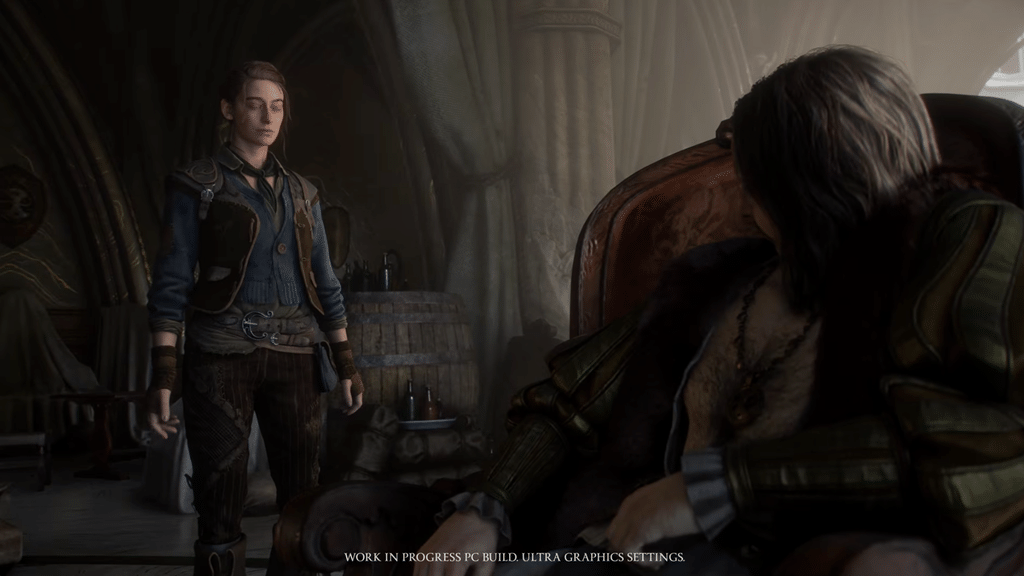
At one point in the presentation, the Hero arrives at the Heroes’ Guild and meets Humphry, a once-great hero now far past his glory days. Humphry is a major player in this story and acts as a sort of guide through the slice of the adventure Playground wanted to show us. His personality and dialogue ooze that specific British dose of sarcasm and absurdity we expect from Fable, brought to life by Matt King. It’s in scenes like this that you realize Playground isn’t just trying to make a generic fantasy RPG and slap the Fable name on it; they are actively resurrecting its unique personality. More importantly, the presentation highlighted how your choices can dictate the outcome of specific situations. We aren’t just talking about massive, game-altering narrative branches, but also the micro-decisions where the Hero reacts to the people and problems around them. Fable has always championed the idea that the player can be a paragon, a fool, a thief, a brute, or anything in between, and the new game clearly wants to place that philosophy right back at the center of the experience. During the showcased mission, we saw how different choices lead to vastly different resolutions, a feature far more important than any spectacular CGI trailer.
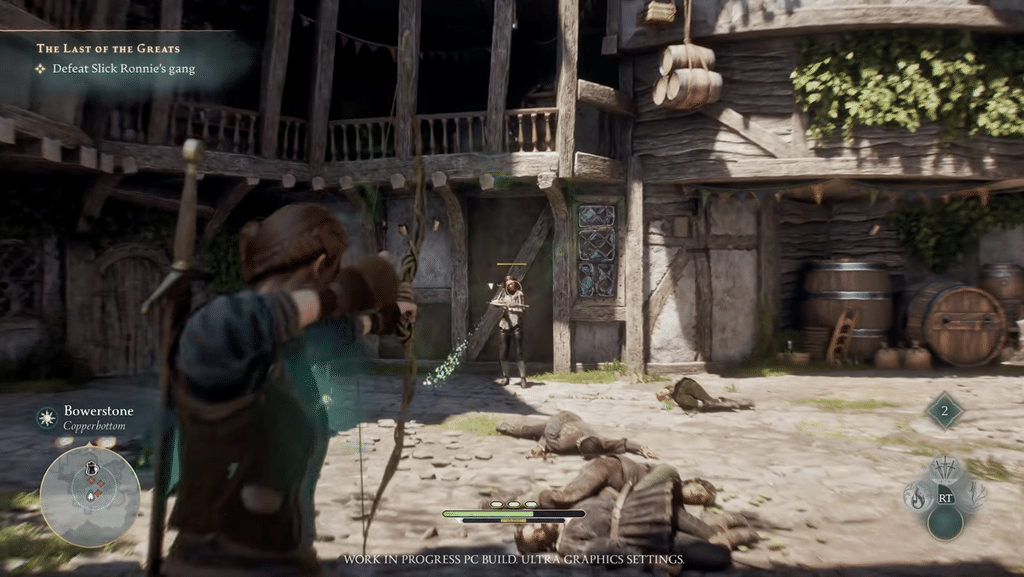
Naturally, it couldn’t be a Fable showcase without combat. Best of all, it looks fantastic. Later in the mission, the developers could choose whether to resolve a conflict through diplomacy or violence. But since combat is a massive pillar of this adventure, they obviously chose violence to show it off. When the fighting broke out, it was an absolute spectacle. The closest comparison I can make is that it looks like a “lite” version of The Witcher 3—which is absolutely a compliment. It’s worth noting that the classic Fable triad of Strength, Skill, and Will hasn’t been discarded; it’s been modernized so you can seamlessly transition between combat styles. You have melee weapons, ranged weapons, and magic, and you can fluidly weave all three into a single encounter. That is probably the most significant overhaul to the combat loop. Magic, in particular, completely cracks open your tactical options. You can use spells to control the battlefield, blast enemies away, or polymorph them into something entirely ridiculous. We are talking about Fable, after all, so it was fully expected that we’d get the ability to turn our enemies into chickens.
The “Befowl” spell is perhaps the purest example of how desperately Playground wants to retain the humor of the originals. The spell turns an enemy into a chicken, effectively removing them from the fight. If you really want to mess around like in the old days, you can simply punt the chicken across the room, or even use it for cooking. Another brilliant little detail demonstrating the team’s commitment to world reactivity: if you cast Befowl on an undead enemy, it turns into an undead chicken. It’s so incredibly stupid that it is absolutely perfect for Fable. However, I do have one lingering reservation before I pass final judgment on the combat: how will it feel after ten, twenty, or forty hours of playtime? The demo was obviously curated to showcase the system’s variety and give immediate access to a full suite of tools. That makes for a great presentation, but the full game needs to prove that this system remains engaging when you’re fighting the same enemy archetypes for the fiftieth time. Some early hands-on previews have already suggested that the basic melee attacks are relatively simple, while the magic and ability weaving are what carry the mechanical depth.

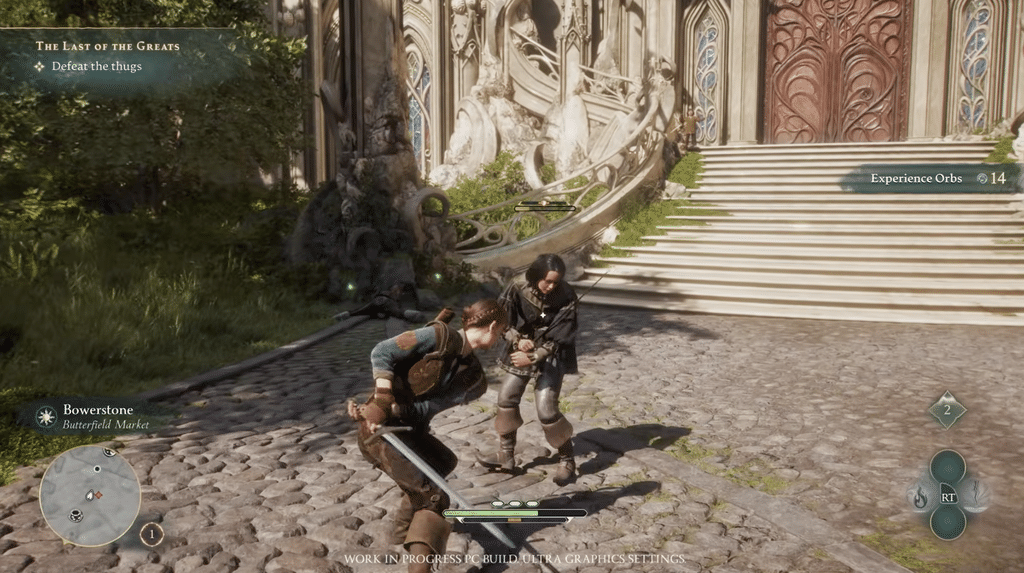
Visually, the game left an incredibly strong impression. The lighting, the sheer density of the city, and the facial animations stood out immediately. Fable always leaned into a more caricatured fantasy aesthetic, but the new game leverages cutting-edge technology to render that style in staggering detail. The characters feature highly expressive animations, which is crucial when so much of the experience hinges on conversations, humor, and the world’s physical reactions. Bowerstone looks dense and detailed enough that you could easily spend several minutes just people-watching. That might not sound revolutionary on paper, but it means everything when you’re sinking dozens of hours into a single world.
Of course, a massive number of questions remain that a Gamescom presentation simply couldn’t answer. We don’t know the actual scope of Albion’s map, the long-term ripple effects of our choices, the depth of the progression system, or if buying houses and chatting with NPCs will remain engaging after the honeymoon phase wears off. We also don’t know how varied the quests will be once we leave the dense streets of Bowerstone for the untamed wilds. But that is exactly why this presentation was infinitely more valuable than just another flashy trailer. Playground Games finally showed us the day-to-day life of Fable. They showed the city, the people, the humor, the micro-choices, the shops, the real estate, and how the player navigates that space.
After everything I saw at the Xbox Media Day, Fable no longer feels like a game just trying to cash in on a famous IP. It feels like a genuine attempt to recapture exactly what made Fable so special in the first place: the humor, the absurdity, the freedom, the reactive world, and that lingering feeling that you can set out to do one thing and end up doing something completely unrelated. Bowerstone looks like the kind of place where I could easily lose track of time doing absolutely nothing of importance.


