






Demonschool is one of those games that looks familiar at first glance, only to reveal itself as a surprisingly unique game, knowing exactly what it wants to be. It borrows the colorful, over-the-top style of Japanese high-school fantasies, combines it with a combat system that at first reminds you of isometric strategy games and mixes everything with a dash of surreal horror. The result is a game that feels nostalgic and fresh at the same time, but above all: exceptionally stylish and sure of what it wants to be.

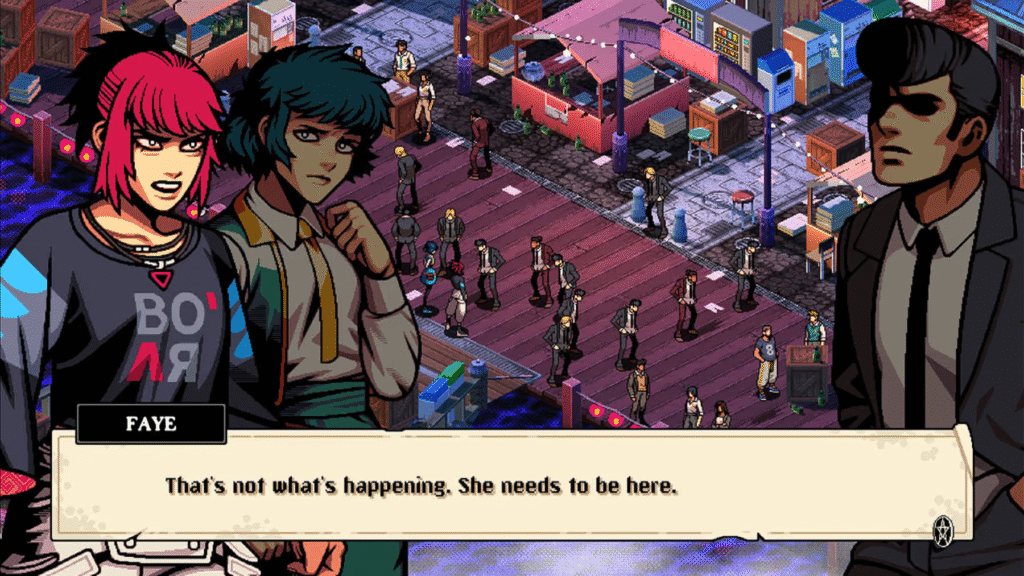
The story revolves around Faye, a fresh new student at enrolling at the school on the mysterious Hemsk Island. Faye comes from a family of exorcists, which prepares her well for her role as a heroine and she makes no secret of her knowledge about demons and the potential end of the world, which will soon happen in the game. It quickly becomes clear that something far more ominous is going on with the island where the school is located than just a few shady gangsters, missing students and a few monsters. Between classes, friendships, side jobs and uncovering the dark secrets of the island, a narrative unfolds that is charmingly self-aware and absurd, creepy and heartwarming all at once.
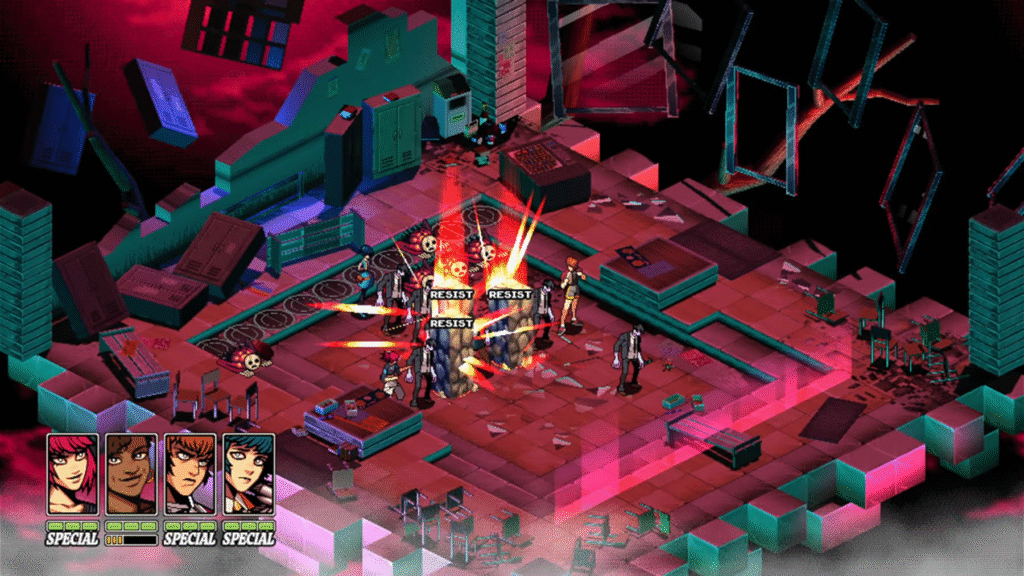
What immediately stands out is the visual style. Demonschool uses a mix of 2D sprites and pixel art and 3D environments that evoke an early polygonal console aesthetic without ever feeling too retro or outdated. A big factor is the color palette, which is vibrant, the exaggerated effects and the character portraits that are full of personality. The stylistic signature is not only pleasant to look at but plays a major role in shaping the atmosphere. The world feels like it is both a parody and a love letter to 90s anime horror and splashers. The kind of sloppy directness and acceptance each character has with what is going on reminds me a lot of Buffy – The Vampire Slayer and similar shows.
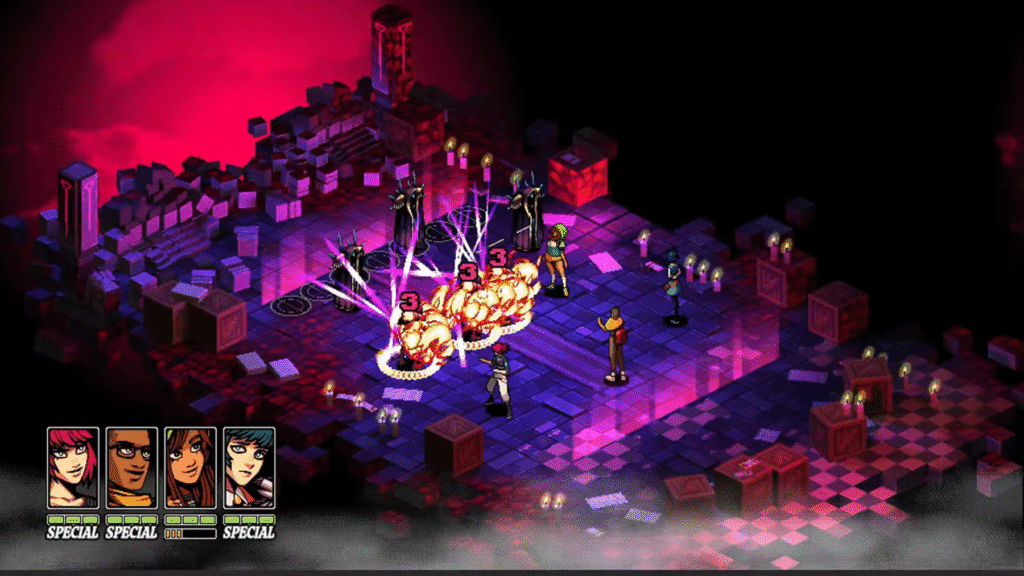
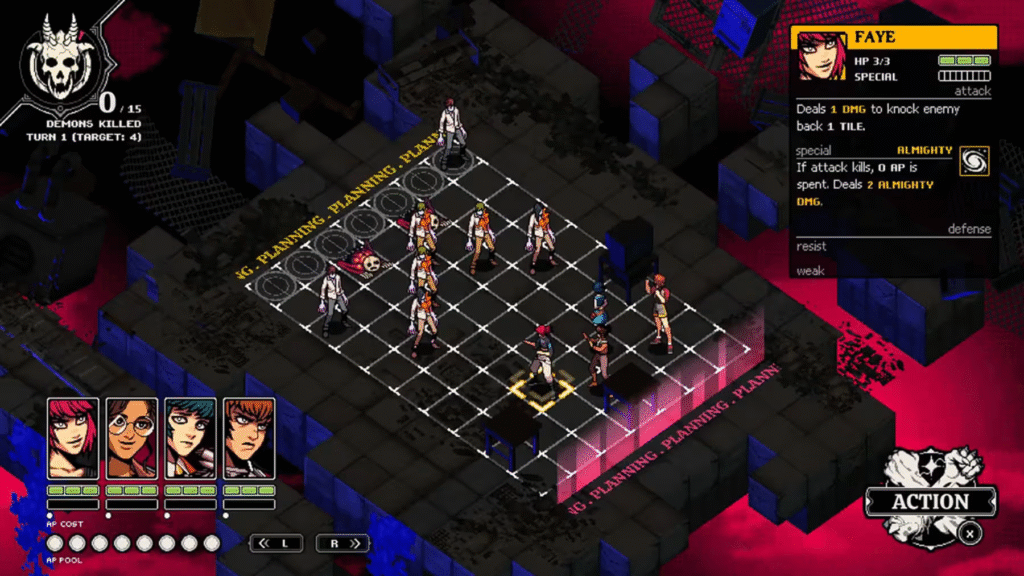
The heart of Demonschool however is its combat system and this is where the game truly shines the brightest. Battles take place in turns, but with a twist. Instead of controlling each unit individually, you plan the entire round beforehand. You position characters, combine abilities, set movement path and only when everything is arranged, the round plays out. This combat approach feels a lot like a mix between a puzzle and a tactics game and. The moment of committing your actions, when everything happens simultaneously, is not only tense, but deeply satisfying, when you nail off just another perfect turn with maximum efficiency and minimum casualties.
The developers put a great emphasis on clarity into the combat. Each move clearly shows what will happen, so mistakes come from poor planning rather than surprises. And if you think you could plan the turn better, you can always rewind back the actions you plan to take. This encourages a lot of experimentation. Many encounters can be solved in multiple ways and the characters’ abilities complement each other cleverly. It’s less like a traditional SRPG such as Fire Emblem or Final Fantasy Tactics and more like Into the Breach, which has a similar focus on combos, positioning and timing. It feels a bit like chess, but with exploding demons.
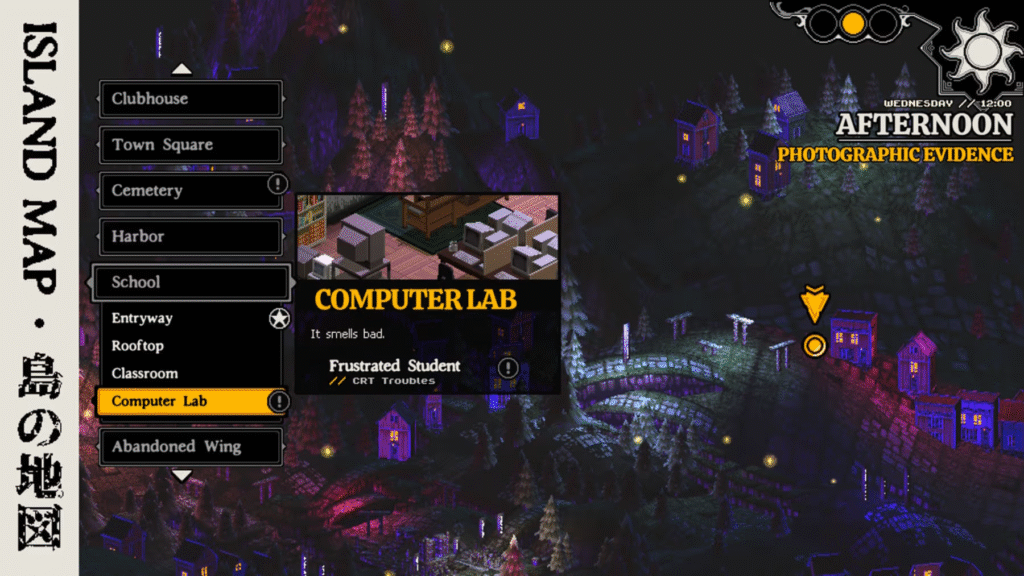
Outside of combat, Demonschool offers more than expected. The school structure serves as a framework for a flexible time-management system. You spend time with friends, complete side missions or improve abilities. Every activity has consequences, sometimes mechanical, sometimes narrative and might take some time away. The social system isn’t as complex as in a Persona game, but it is far more charming and focused than in many indie titles, thanks to the well written support cast that surrounds fay in her endeavour to save the world. The dialogues are snappy and witty, as said it reminds me a lot of Buffy and the characters are memorable and fun.
The story itself is structured episodically, smaller build ups, lead to bigger revelations with spectacular boss fights. This makes it’s easy to enjoy the game in short sessions. At the same time, there is a consistent tension curve, as the world becomes increasingly bizarre and unsettling and it always reminds you of the end of the world. The balance between light horror and humour is remarkably well managed. Demonschool takes its darker moments seriously, but never so seriously that it loses its charm or becomes unsettling.
In terms of gameplay, the title offers a gentle lurning curve. The early chapters ease players into the mechanics, before more challenging encounters appear later on. Those seeking difficulty will find plenty in optional content. The difficulty was never an issue for me and frustration was rare, every encounter felt like a puzzle that was solvable. And for people who do not enjoy the combat or think it is too much, there is an option to skip encounter entirely.
A special highlight for me was the music. The soundtrack blends synthwave-like tracks with rock elements and horror motifs. Each chapter has its own mood and the tracks were catchy to the point I was bobbing my head to them while playing on my Nintendo Switch 2 at home and on the go.
On the technical side, Demonschool ran and looked great on the Nintendo Switch 2, even without a native Nintendo Switch 2 version as of the time of the review. Back at Gamescom the developers explained that Nintendo is providing a lot of development kits and that seems to not have changed until the release of the game.
We would like to thank Ysbryd Games for providing us with a copy of the game for review purposes.
Demonschool (Nintendo Switch)
Demonschool is a fun and creative genre blend characterized by its amazing 2D and 3D art mix, fresh and puzzly Into the Breach like combat and witty and fun written horror story. From dialogue to animation, from combat to mechanics to music, it follows a unified artistic vision. It might disappoint people who expect a Persona 2 like 100-hour JRPG, but Demonschool doesn’t try to be that at all. It’s a focused, stylish tactics game, by a team that exactly knew what it wants to make.


